$4.9 Billion in Losses Signal Deepening Pressure in Commercial Auto, Even as Data and AI Expand Visibility
(NewsUSA) - The commercial auto industry is entering another year of sustained strain, as rising claims severity, persistent risky driving behaviors, and escalating litigation continue to push losses higher—even as fleets and insurers gain unprecedented access to data and technology.
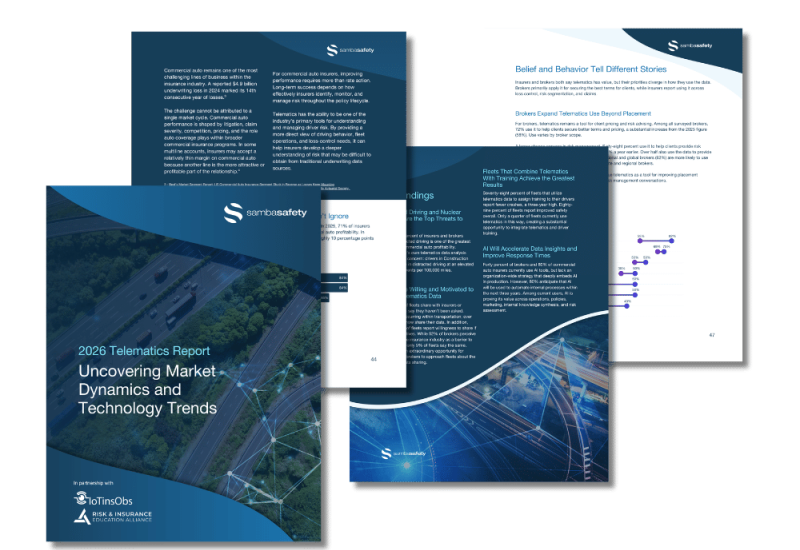
SambaSafety, a provider of cloud-based driver risk management solutions, outlines the findings in its 2026 Driver Risk Report: Current Trends Shaping Roadway Safety. The report documents a 64% increase in claims severity since 2015, and citing industry research, an 81% rise in thermonuclear verdicts—jury awards exceeding $100 million—in 2024 alone. Commercial underwriting losses approached $4.9 billion that same year, according to data cited in the report.
The data underscores a central tension in the industry: while visibility into driver behavior has never been greater, translating that visibility into sustained risk reduction remains inconsistent.
Risk Behaviors Continue to Drive Losses
The report draws on nearly 50 million motor vehicle records, 28 million telematics events, Compliance, Safety, Accountability (CSA) data, and 13 years of claims analysis. It identifies several long-running behavioral risks that continue to shape commercial fleet performance.
Among the most notable findings:
- Distracted driving violations have increased 31% over two years
- Speeding remains the leading violation, accounting for 36.5% of major violations in 2025.
- Driver fatigue is associated with a 36% higher accident risk
- Excessive speeding is most common on both very short trips (1–5 miles) and long-haul routes exceeding 500 miles
- Large truck fatal crash involvement has risen 42% since 2009
- Out-of-service violations reached 478,683 in 2025, up 6% year over year
While fleets now have broader access to telematics and behavioral data, the persistence of these trends suggests that risk is increasingly driven by habits, fatigue, and operational pressure rather than lack of information alone.
Growing Gap Between Insight and Execution
A key theme emerging from the report is the widening gap between data availability and operational action.
SambaSafety notes that many organizations now have access to advanced analytics and real-time driver monitoring, but struggle to consistently apply insights in day-to-day safety management. This disconnect is particularly evident in coaching, intervention timing, and cross-functional coordination between insurers, fleets, and risk teams.
The report is equally clear on what works. Organizations combining continuous driver monitoring with targeted training have achieved a 77% reduction in violations within 12 months and a 22% reduction in claims frequency — evidence that execution discipline, not data access, is the decisive factor in outcomes.
AI and Automation Move to the Center of Risk Management
In response to ongoing challenges, SambaSafety has expanded its AI-powered capabilities aimed at improving how organizations interpret and act on risk data.
New tools include AI Profile Summary, which consolidates driver data from motor vehicle records, CSA records, telematics, claims, and training into a single risk overview. Risk Insights provides fleet-level scoring and trend analysis to identify the most significant drivers of exposure. Learning Paths structure driver education into sequential programs designed to reduce administrative burden and improve engagement.
The company also introduced SambaSafety Verified, a tiered accreditation program recognizing fleets that actively manage driver risk, along with a Fleet Risk Management Academy offering structured training across safety fundamentals and advanced risk strategy.
Industry Outlook: Collaboration Still the Missing Link
According to SambaSafety CEO Matt Scheuing, progress in technology and data integration is evident, but the industry has yet to fully normalize collaboration around safety performance.
“Three years into this research series, we’ve seen meaningful progress in technology and the connection of safety and risk stakeholders,” Scheuing said. “The dialogue is deeper, the technology stack is more capable, and compliance is being integrated more deeply into safety programs as a measure of program health.”
Still, the report suggests that the next phase of industry improvement will depend less on data availability and more on how effectively organizations embed risk intelligence into everyday decision-making.
The full 2026 Driver Risk Report is available at sambasafety.com.