
x

Interview with David Garner, General Manager at Cashflow Rentals

Interview with David Garner, General Manager at Cashflow Rentals

(Featured) - Garner outlines neighborhood-level due diligence, cross-border ownership structures and the risks behind high spreadsheet returns.

Edited by Haley Spracale, Editor at Featured News · Nov 6, 2026

As a General Manager working in international real estate, can you introduce yourself and explain the expertise you bring to helping foreign investors buy U.S. rental properties?

I'm a British citizen who started buying rental properties in the United States in 2016. Between 2016 and 2022, I scaled my portfolio from zero to 124 properties. We mostly bought the cheapest possible properties and rented them out, often to Section 8 tenants.

Then, in 2023, our portfolio collapsed. The reality of owning and managing cheap houses in bad neighborhoods, along with issues with bad real estate agents and contractors, started to bite. Between tenants not paying rent or causing damage to our properties, deferred maintenance issues, overvalued properties, poor-quality renovations delivered by contractors, and a wave of evictions and vacancies, our monthly cash flow fell from a positive $30,000 a month to negative $60,000. Within six months, we had burned through hundreds of thousands of dollars in cash reserves and were unable to make our mortgage payments.

After the carnage of foreclosures, short sales, and heavy personal losses, we rebuilt a new portfolio around the lessons we learned. We learned the hard way what not to buy and how to manage U.S. tenants more effectively from overseas. Today, we have a much smaller 30-property portfolio that performs far better than everything we owned before.

What career experiences led you from investing in U.S. rentals as a non-resident yourself to guiding overseas clients through deal sourcing, due diligence, and investment structuring?

Unfortunately, there are lots of companies out there selling foreigners the kind of cheap, poorly maintained properties in bad neighborhoods that I owned. Often, this sales pitch comes in the form of “guaranteed passive income” when a Section 8 lease is involved.

The reality I learned through bitter experience is that those properties in those neighborhoods are best suited to local investors who are capable of self-managing and dealing personally with the inevitable issues that arise. For a remote investor many thousands of miles away, those problems compound and can very quickly run into tens of thousands of dollars.

From your conversations with overseas clients, what are the main reasons foreign investors are increasingly choosing U.S. rental properties over real estate opportunities in their home countries?

There are lots of reasons foreigners choose to invest in U.S. real estate. Much of it depends on where the buyer is from.

First, the U.S. is one of the most accessible global property markets. There are very few restrictions on who can buy here. There are some state-level restrictions on certain types of ownership for residents of some countries. For example, under Florida’s SB 264 (2023), persons domiciled in a “foreign country of concern” who are not U.S. citizens or green-card holders cannot acquire agricultural land in Florida or any real property within 10 miles of a military installation or critical infrastructure facility. Buyers domiciled in China face a broader ban on acquiring almost any Florida real estate. None of this affects the vast majority of international buyers, and none of the markets I work in across the Midwest have comparable restrictions.

My Latin American clients tend to want dollar-based assets and income due to the more volatile nature of the economy and currency in their home countries. They feel that owning physical real estate that generates dollar revenue is a safer long-term bet than their domestic stock market or local property markets.

My European clients are more motivated by diversification. They often find a lack of quality opportunities in their domestic real estate markets, and the increasing regulatory and tax burden of owning property and being a landlord in some European countries, such as the UK, where I’m from, has pushed them to look further afield.

For all overseas investors, one of the biggest drivers of interest in the U.S. market is the availability of financing for foreigners. We use foreign national DSCR loans to purchase our properties, so we don’t need a Social Security number, U.S. address, or U.S. credit to qualify for the loan. All you need is a rental property that meets the lender’s criteria in terms of rental income and operating costs. If the rent covers the mortgage, taxes, and insurance, you can most likely get approved. That’s a huge benefit for residents of countries where financing is based on the person rather than the property, where there may be limits to the number of loans you can hold, or where mortgages are just not available at all.

You have noted strong interest from investors in countries such as Argentina and Brazil; how does economic or political uncertainty at home shape the way these buyers evaluate the U.S. rental market?

It's certainly a factor. I've spent a lot of time personally in both of those countries, and we've also helped clients from Colombia, Ecuador, and Chile. As I mentioned, economic and fiscal volatility at home drives their appetite for stability, and the U.S. market and U.S. dollar are very attractive to those folks.

Also, I think the American Dream is more alive in some of those countries than it is in the U.S. right now. Culturally speaking, many residents of those countries consider the United States aspirational, and owning property there can be seen as somewhat of a status symbol.

As some foreign buyers move away from coastal markets toward places such as Cleveland and other Midwest or Northeast metros, what signals do you use to identify a market with durable rental demand?

We have a multi-layered approach to market analysis. We look at the state, city, and county and their regulatory frameworks. Is it safe to own property there? What do landlord-tenant laws look like? Can you evict a non-paying tenant, for example?

But when we're analyzing specific properties, we're casting a much narrower net. We're looking at the neighborhood, street, and house. We're looking for neighborhoods that are improving and on a positive trajectory: a falling crime rate, proximity to a growing job market, improving schools, a declining poverty rate, a falling eviction filing rate, and household incomes that are consistently growing in real terms. We're also looking at whether local residents can afford the rent. All of this analysis is done at the block and street level.

This is a big mistake I see a lot of overseas and even U.S. investors make. They'll look at crime, jobs, and population statistics for a ZIP code. But that's far too large a data sample to be relevant to any particular street, and it can hide the areas you should be avoiding, as well as where the real opportunities are.

Recently, we ran our analysis on two houses in a Kansas City suburb. They were on the same street, in the same ZIP code, and 1.2 miles apart. Based on ZIP code data, they looked like the same house, but one had a rising crime rate, a poverty rate that had doubled over five years, and rising numbers of vacant houses and evictions. The data for the other house showed the opposite: rising household income, a declining crime rate, and a poverty rate that had halved. One of those houses had the potential to be a great rental investment. The other one was likely to be a real problem for whoever bought it.

One thing we've learned over the past 10 years is that your long-term profitability will be closely tied to the neighborhood and street you buy in, even more so than to the house itself.

When evaluating a potential single-family or small multifamily rental, what does your due-diligence process reveal that overseas investors may otherwise miss from afar?

Aside from the detailed neighborhood analysis I already discussed, we get a general home inspection, a sewer scope, usually a pest inspection, and an independent appraisal. These are often missed by overseas buyers who deal directly with investment property sellers that provide only in-house comparable values and walkthrough photos or videos showing the property's condition.

We find all sorts of issues during inspections, even in newly renovated turnkey rental properties. Earlier this year, an inspector spotted an issue with the sewer line in the basement of a property our client from Asia was buying. We had a specialist come out to check it, and it turned out that the line had collapsed under the basement floor. We had the seller pay for the repair, which came to over $9,000. Without an inspection, our buyer would have owned that problem—and the bill.

If we're buying a turnkey property, we also review the lease and tenant file. We have our own internal screening process and criteria for leasing, and if an application accepted by someone else wouldn't have passed our filter, we don't want that tenant.

Foreign buyers often value greater control over their investments; how can they structure ownership, financing, and local property management so that control does not become an operational burden?

In terms of structuring their investment, I recommend having a cross-border tax expert on hand to make sure they set up the most appropriate type of entity to hold their U.S. property. An LLC isn't always the right choice for everyone. Canadians, for example, are often better suited to a U.S. limited partnership because of a discrepancy in how the CRA and IRS view a U.S. LLC. Getting the structure right before they start is much better than trying to fix it later and potentially facing liability or tax consequences in the U.S. or at home.

We also connect our clients with a small group of specialist U.S. mortgage lenders who understand foreign national borrowers and have specific products and underwriting processes designed for them. That space has evolved a lot since I started buying in the U.S. I only wish I had access back then to the type of financing my clients have access to today. We were able to secure a 30-year fixed-rate DSCR loan at 7.25% for a foreign national with no U.S. credit, while U.S. homebuyers are paying 7.49% (Mortgage Bankers Association, Mortgage Applications Survey, released October 7, 2026).

Property management is something we help our clients with on an ongoing basis. Managing rentals from overseas can seem daunting—and it is. There is a lot a foreigner might not understand about the legal system and property management regulations, especially if they are very different from those in their home country, which they often are. For example, we're currently mentoring a German client through an eviction in Cleveland. It's not a nice thing to have to do, but understanding the process and legal requirements is essential.

We continue to mentor our clients through the process after they close, making sure they have expert advice on hand to make good decisions when the time comes.

Based on your experience with cash buyers negotiating in a higher-rate environment, what is one practical negotiation approach foreign investors can use to pursue a better rental-property deal without sacrificing quality?

This is exactly what we're focused on right now. Everyone knows it's a buyer's market, and we're using that to our advantage.

Most of the sellers I deal with are contractors who have renovated homes. More often than not, they've used expensive, short-term hard money loans to fund their purchases and renovations. Now they need to pay them back, but the retail market is flat. That's given us the opportunity to negotiate much better deals.

Typically, we'll negotiate a discount and use some of it as a seller credit to cover our buyers' closing costs. Most foreigners don't understand how high closing costs can be in the U.S., and reducing their cash to close without reducing their equity is a very attractive proposition to most. If there's enough in the deal, we can also use it to buy down their interest rate and improve their cash flow.

If you structure a deal well, you can reduce your cash to close by thousands of dollars and, at the same time, get a lower rate on your mortgage. It's a win-win.

For foreign investors considering their first U.S. rental acquisition, what is the most important step they should take before making an offer to protect both the property’s long-term returns and their investment structure?

Speak to someone with experience in the market as a foreigner, whether that’s a real estate agent who has worked with overseas buyers or a company like mine. Get advice on the right type of structure to set up, and start speaking to lenders with a dedicated foreign national DSCR loan product.

But by far the biggest and best piece of advice I give every client is this: don’t get fooled by numbers on a spreadsheet, as I did when I started out. Very often, the highest “on-paper” returns don’t turn out as you hope. There is a direct relationship between risk and return, and that’s a lesson we should all remember.

Disclosure: Cashflow Rentals does not earn referral fees or commissions from the lenders, tax advisors, or property managers we refer clients to.

About the expert

David Garner

David GarnerGeneral Manager at Cashflow Rentals

This content is for informational purposes only and should not be considered financial or investment advice.

This story was produced by Featured and republished with permission. Experts featured here are members of Connectively, Featured's expert network.

Home purchase contracts are falling through at near-record rates, and real estate experts share what can help

Home purchase contracts are falling through at near-record rates, and real estate experts share what can help

(Featured) - Yahoo Finance reported that nearly 1 in 7 home purchase contracts fell through in September. Real estate professionals share the main reason they are seeing buyers back out and one step that can help keep a deal together.

Edited by Adrian James, Editor at Featured News · Roundup by Featured · Oct 21, 2026

Homebuyers are canceling contracts at near-record rates. Nearly 1 in 7 home purchases fell through in September, according to Redfin data reported by Yahoo Finance.

We asked real estate professionals what they’re seeing in their own deals: why buyers are backing out, and one thing buyers or sellers can do to keep a deal from falling apart.

Roundups

Cynthia MattizaAssociate Broker, Kuper Sotheby’s International Realty · Austin, TX

In my opinion, the biggest reason buyers are backing out is due to their number of options. Here in Austin, buyers know there are plenty of options to choose from with the abundant supply. Much of that supply, those sellers just took a price cut to further show motivation. IN this market, the inspection period has become a second negotiation. Buyers then further asking for more credits, concessions and asking the sellers for more.

If a seller won’t move on repairs or credits, the buyer cancels the contract because walking costs them almost nothing. The probably only did a $300 option period, and thats not as much skin in the game for the buyer. I’m also seeing buyers go under contract, keep watching new listings, and cancel when something better or less expensive hits the market. We are also seeing buyers take weeks to decide on a house, only to back out when they find something better or at a more aggressive price.

One thing sellers can do to keep a deal together: Get a pre-listing inspection and fix or disclose the big items before you list. Make the house so bullet proof for buyers to not heavily negotiate on their repairs. Check the roof, foundation, HVAC, drainage. Know what the biggest ticket items could be, and address it before you list. Ask your agent what they are seeing in teh contracts, are buyers asking for concessions, or asking sellers to make repairs. Be ready for what can come from the buyer's negotiations. When the buyer’s inspector finds what you already told them, there’s nothing to renegotiate. The surprises are what kill deals, not the issues themselves.

One thing buyers can do: Get fully underwritten with a local lender before you write an offer, not just pre-approved. Ask your lender for all the lending scenarios, what if the rate changes, what does that look like? If you want to ask the selelrs to pay for a rate buy down, how much should you ask? Know your real payment at today’s rate. Most of the cold feet I see is a buyer using numbers from an online calculator and not accurate numebrs, so they become a bit sticker shock when they see the real lending numbers, after they’re under contract. Oftentimes they did not factor the montly HOAs, and what homeowners insraunce for that spcific property may have looked like that could have swayed the costs.

Cristina OrtegaFounder, Mrs. Property Solutions · Pasadena, CA

When a deal falls apart, it's usually during the inspection. The buyer

signs, then learns what's wrong with the house, and the price they agreed

to stops making sense to them. It happens a lot with the older, inherited

homes we buy, where nobody has kept up with repairs in years.

We bought a Burbank house from two sisters who inherited it from their

father and lived out of state, and it had serious foundation problems. We

priced those in up front, so there was nothing to reopen in escrow, and

their check at closing 21 days later was the exact amount we'd offered. A

seller on a traditional listing can do the same thing by paying for an

inspection before the house goes on the market and putting the report in

buyers' hands before they bid.

Ryan KoubeserianReal Estate Broker, GRI, The Koubeserian Group at the Coronado Shores Company · Coronado, CA

Currently I am seeing buyers cancel contracts when they get cold feet for a variety of reasons from overall stock market volatility, global issues and probably uncertainty with the mid term elections. In my particular market at The Coronado Shores where we specialize in selling luxury high rise condominiums, we occasionally have seen buyers cancel contracts over just plain and simple buyers remorse and cold feet, HOA reserves being outside of their comfort zone, buildings that may have differed maintenance issues or looming special assessments. As recently as last spring we had a contract cancelled as a result of a building lacking disclosure related to differed maintenance. Albeit thankfully, incredibly rare with my dealings.

Joshua LemmonCo-Founder, West Hill Management · Akron, OH

I think the headlines are doing the most work, but a combination of everything together helps buyers walk. Many people are already reluctant to buy a home with elevated rates, but worsening news headlines give buyers an easy way out. With already looking down the barrel of a hugh new payment, and the headlines are saying "theres a crash coming, rates are at all time highs, inflation this inflation that"

What can sellers do? Offer concessions in any way possible, such as paying down points, and state this clearly in the listing!

Buyers? Now is the time to get the best deal you can; you have the power to negotiate. Ask for repairs or credit. Ask for seller financing! Look for property that's been sitting on the market, and send offers with a 10-15% discount—you may be surprised and get a response.

Brett Johnsonreal estate investor, licensed Colorado real estate agent, owner, New Era Home Buyers · Denver, CO

By far the most common reason buyers are backing out deals these days in my investor experience is because when the emotion of having an offer accepted subsides, the numbers just don’t work for them anymore. Buyers might be okay with the purchase price but then get the inspection results back, the insurance quotes and tax estimates and when they start adding up the monthly payment figures it isn’t quite as comfortable as it was when looking at the purchase price alone. Seeing those numbers in black and white can crush that illusion of a great deal.

Once clients start worrying about one thing with a property, they tend to start looking for things that are wrong with it. That’s why I always encourage sellers to lay all known problems out in front of buyers before the inspection so they don’t feel surprised. As a buyer, I recommend getting your insurance quotes, get preapproved and run the numbers on actual monthly ownership costs and have a serious talk with your lender before you decide to offer. A little bit of work before signing can save you lots of headaches after you’re under contract.

This story was produced by Featured and republished with permission. Experts featured here are members of Connectively, Featured's expert network.

Mortgage rates reach 7.49% as housing experts share expected market changes

Mortgage rates reach 7.49% as housing experts share expected market changes

(Featured) - Bloomberg reported that U.S. mortgage rates reached 7.49%, the highest level since 2023. Housing and mortgage experts explain changes they expect the rate environment to bring over the next 6–12 months.

Edited by Adrian James, Editor at Featured News · Roundup by Featured · Oct 9, 2026

Bloomberg reported that U.S. mortgage rates reached 7.49%, their highest level since 2023.

We asked housing-market and mortgage professionals to identify changes they expect this rate environment to bring for buyers, sellers or lenders over the next 6–12 months.

Roundups

Russell VolkREALTOR®, Elite Realty Group · Huntingdon Valley, PA

What I’m seeing is that higher mortgage rates are creating two very different housing markets. Many of the 55+/Active Adult and downsizing buyers I work with are coming from homes that have been either fully paid off or they have substantial equity and some are able to buy with cash or a large down payment. Those buyers are much less affected by an increase in mortgage rates than buyers who are putting 20% or less down payment.

Over the next 6 to 12 months, I expect that difference to become more noticeable. Homes that appeal to downsizers with lots of equity and cash buyers can still see strong demand, while homes that depend primarily on financed buyers may require more aggressive pricing or seller concessions.

I also expect builder incentives and rate buydowns, and I already see that, to become increasingly important because many financed buyers care more about the monthly payment than a relatively small reduction in the purchase price.

Doug Perrystrategic financing advisor, Real Estate Bees · Bethesda, MD

Rates are going up to slow down inflation, which has been running hot for years, eroding purchasing power for consumers through higher prices on just about everything. Consumer budgets are exhausted, and under stress. Higher rates drive up borrowing costs in just about every lending segment and higher savings rates encourage consumers to save money instead of spending it. The slowdown in demand will drive down inflation but it will take 6-12 months.

As prospective homebuyers pull back during this higher rate cycle, I don't think we will see a noticeable decrease in home prices, but we will see a big shift in negotiating power favoring home buyers.

Prospective home buyers shouldn't back out of the market just because rates are up and home prices aren't dropping. Historically, some of the most profitable moves in real estate have been against the trend, and this is one of those times home buyers have that exact opportunity.

Dale GremillionSenior Loan Officer and Producing Branch Manager, Capital Home Mortgage Arizona

Rates being at 7.49% will allow buyers to sit on the fence and shop around with us for the best option whether it be conventional FHA VA or Jumbo.

As we start to see more inventory available on the market home will sit longer and allow sellers to give more towards closing cost. Using programs such as Home Plus AZ or Home in Five Advantage can help your buyers get closed on their next home faster.

Another thing we have noticed is the increase of using one time close loans. These loans will allow your buyers to get locked into one rate when they start building their home and only draw on what they use during the building process.

Something that I have noticed that was unexpected was more buyers wanting to use 1099 loans on there primary residence. With these loans you only need to put down 10-20% and do not need to provide tax returns but can use bank statement's or P&Ls.

Tripp ButlerOwner, Southbridge Greater Savannah Realty · Savannah, GA

The housing market has definitely slowed in our area because of interest rates, inflation (which is driving gas and food prices up), and the uncertainty around the war in Iran. Buyers have the upper hand right now and can negotiate much more on price, ask for closing costs, and many are getting an Old Republic Home Warranty included in their contract. It has taken a little more explaining for sellers to understand this because they are still expecting to get what their neighbors sold their house for a few months back, when interest rates were more than half a point lower than they are today.

This story was produced by Featured and republished with permission. Experts featured here are members of Connectively, Featured's expert network.

The New Roommate Economy: How Flexible Shared Living Is Solving the Housing Crisis and Rewarding Building Owners

(Arthur Silver, Contributing Writer) - As young renters face record costs in America's largest cities, a maturing co-living sector is showing it can deliver affordability and strong investor returns at the same time. The emergence of Outpost Group as the country's largest co-living operator may be the proof of concept the industry has been waiting for.
-----

When Sergii Starostin arrived in the United States, he did not experience the American dream so much as the American housing nightmare. Finding an affordable apartment in New York City as a newcomer - without credit history, without a local network, without savings padded by years of employment - was, as he later described it, an exercise in humiliation. Brokers ignored him. Landlords turned him down. The options that remained were either unaffordably expensive or depressingly grim.

That experience became the founding premise of Outpost, which Starostin co-launched in 2016 with a straightforward mission: create furnished, shared living spaces that were not only financially accessible, but genuinely desirable; places where young people could land in a new city, build a life, and feel part of a community while doing it.

Nearly a decade later, Outpost has become the largest co-living operator in the United States. In November 2025, the company announced a merger with June Homes, a proptech-driven rental platform with roughly 2,600 units across seven major cities. Combined under the holding company Outpost Group, the new entity manages approximately 4,000 units across New York City, Boston, Washington D.C., Chicago, Los Angeles, San Francisco, and Austin  - generating an estimated $65 million in annual revenue. Crucially, it is profitable, a distinction that separates it from nearly every major competitor that has tried and failed to crack this market at scale.

The Affordability Case: More Than a Marketing Claim

The term "affordable housing" carries considerable political and regulatory baggage in real estate circles. But the affordability that co-living operators like Outpost offer is not a product of government subsidy, tax incentives, or income restrictions. It is a function of architecture, amenity-sharing, and operational efficiency… and the numbers are striking.

Outpost estimates that its furnished rooms and co-living arrangements are typically 30 to 40 percent cheaper than comparable studios or one-bedrooms in the same markets. In New York City, where the median asking rent for a studio has exceeded $3,000 a month in recent years, a furnished private room in a co-living property with shared common areas, utilities included, can be secured for $1,500 to $2,200 a month -  a difference that, for a 24-year-old arriving from Cincinnati or Columbus with a new job offer and $8,000 in savings, is not marginal but existential.

"Young people still want to move to big cities. They still want opportunity. What they need is a way to afford it, and that's the problem we're here to solve. Thankfully, now at a national scale." — Sergii Starostin, CEO, Outpost

The demand data supports this. Surveys conducted by Outpost indicate that more than 70 percent of young newcomers find it "hard" to secure housing within their budgets, and more than half say they would prefer a private apartment if it were not cost-prohibitive. That second statistic is telling: co-living is not the first choice of most renters aged 18 to 34. It is the rational choice in the face of a market that has priced them out of the alternatives.

The structural forces driving that dynamic show no signs of reversing. High interest rates have suppressed new construction. Zoning restrictions in many cities continue to limit multifamily density. Homeownership has been pushed further out of reach for millennials and Generation Z, extending the renter lifecycle well into what previous generations considered prime home-buying years. The result is a swelling population of young professionals who are committed, long-term urban renters and who represent a stable, growing customer base for the co-living sector.

The Investor Equation: Why Building Owners Are Paying Attention

If affordability were the only story, co-living would be an interesting social enterprise. What makes it compelling as a real estate model is the simultaneous value proposition it delivers to building owners; a proposition that, in many markets, substantially outperforms traditional apartment leasing.

The math begins with density. A traditional three-bedroom apartment in a major city might rent for $4,500 a month as a single unit. Configured as a co-living property with three private bedrooms, shared kitchen and living space, and included utilities and furnishings, the same floor plan can generate $2,000 to $2,200 per room or $6,000 to $6,600 a month total. The tenant pays less per person. The building owner collects more per square foot. Both sides benefit.

Industry data reinforces this. Research from Primior Group found that co-living properties generate 30 to 50 percent more income than traditional apartment configurations on a per-unit basis. A case study of the ALTA development in Long Island City, New York found that co-living units produced 44 percent higher income per square foot than conventional apartments in the same building, with 30 percent higher net operating income per square foot - even after accounting for the cost of housekeeping and additional services.

Outpost's model for building owners goes beyond yield. The company offers landlords two distinct structures: a standard property management arrangement and a master-lease co-living model, in which Outpost leases the building and assumes operational responsibility, including vacancy risk. For building owners who want predictable income without day-to-day management exposure, the master-lease structure functions as a performance guarantee backed by an operator with a national portfolio and the financial discipline to honor it.

That reliability has become a significant differentiator. The co-living space has been littered with well-funded casualties, namely operators that grew quickly on venture capital, burned through reserves, and left landlords stranded with broken leases and empty buildings. Outpost has, in several instances, been the entity that stepped in to restore order. Since 2019, the company has absorbed the portfolios of failed operators including Bedly, interns.nyc, and, most recently, Common, in each case stabilizing properties and restoring landlord confidence. It is a track record that speaks directly to the counterparty risk concerns that have historically made some building owners hesitant to enter co-living arrangements.

"We built Outpost to be the reliable operator in a very unpredictable industry. Where others chased growth at any cost, we focused on choosing great projects, controlling expenses and treating every building owner like a long-term partner." — Sergii Starostin

The June Homes Merger: Building for the Long Term

The merger with June Homes adds both scale and complementary capabilities to Outpost's platform. June Homes, backed by SoftBank Ventures Asia, built its reputation not on the co-living experience per se but on the rental process itself,  creating a system that allowed renters to discover, apply for, and move into an apartment in as little as three hours, with no broker fees and transparent pricing. For renters arriving in a new city, it addressed a different but equally painful friction point: the sheer difficulty of navigating an opaque, time-consuming, and often exploitative rental process.

"We created June Homes to bring more transparency into the rental market and make the process easier for both renters and landlords," said Dan Mishin, June Homes' founder. "Now, we're excited to join forces with Outpost to continue that effort by creating a market leader in the flexible living category positioned for further expansion and acquisitions.”

Mauricio Zuniga, June Homes' CEO, will serve as President of the combined company, and June Homes' full operations team will remain in place. The newly merged organization employs approximately 200 people across its seven-city footprint and will extend June Homes' events and community programming across the entire Outpost portfolio.

For Starostin, the merger is a milestone in a longer-term ambition. He speaks openly about building a "Marriott for co-living;”  a nationally recognized brand that makes medium- and long-term furnished rentals as simple and reliable as booking a hotel room, with consistent quality standards, a trusted experience, and the infrastructure to expand internationally. His five-year target: more than $500 million in revenue and a continued consolidation of a sector that still has significant fragmentation.

A Sector Coming of Age

The broader co-living market has matured considerably from its early days, when the concept was often dismissed as glorified dormitory living for adults who hadn't yet earned their independence. Today, the global co-living market is valued at roughly $16 billion and is projected to reach $30 billion by 2030, growing at a compound annual rate exceeding 11 percent. In the United States, the sector has been shaped by a period of painful consolidation. The failure of high-profile operators has weeded out the undisciplined and elevated the companies with genuine operational depth.

That winnowing is, in many respects, good news for real estate investors evaluating co-living as an asset class. The companies that survived the shakeout, Outpost chief among them, did so by building real businesses rather than growth narratives. They have occupancy data, operating cost structures, and landlord relationships that can be underwritten. They have demonstrated the ability to manage through economic cycles. And they are operating in a demand environment that is, by almost every structural indicator, exceptionally favorable.

The United States faces an estimated housing shortfall of more than four million units. New household formation continues to outpace new construction. The cohort of renters aged 22 to 35 is the largest in American history, and a substantial portion of them are moving to cities where a traditional apartment is simply not an accessible entry point.

The Bottom Line

The most interesting thing about flexible shared living in 2026 is not that it has survived -  it is that the dual value proposition at its core has proven durable. Young renters gain a foothold in expensive cities at costs that would otherwise be prohibitive. Building owners unlock superior revenue per square foot with a reliable operational partner assuming the complexity. And the best operators, having endured a brutal period of industry consolidation, have emerged leaner, more credible, and better positioned than ever.

For real estate investors, developers, and building owners still on the fence about co-living, the Outpost-June Homes merger provides a useful reference point. This is what the sector looks like when the model works: profitable at scale, disciplined in operations, and solving a problem.  The inability of an entire generation to afford to live in the cities that drive the American economy shows no sign of going away.

For more information, visit www.outpost.me.

New Home Sites in Coastal NC to Get Expanded Access

(NewsUSA) - Kingfish Bay, an exclusive gated waterfront community in Calabash, North Carolina, has launched the final phase of development just as the Carolina Bays Parkway Extension is officially announced, opening new possibilities for buyers seeking luxury coastal living near Myrtle Beach, Sunset Beach, and Wilmington.

Rare Opportunity for Waterfront Living

Kingfish Bay offers discerning home buyers a limited chance to secure new waterfront homesites along the tranquil Calabash River, within a private gated Calabash North Carolina community. Homes feature Caribbean-inspired architecture and resort-style amenities, ideal for vacation homes, retirement, or year-round living.

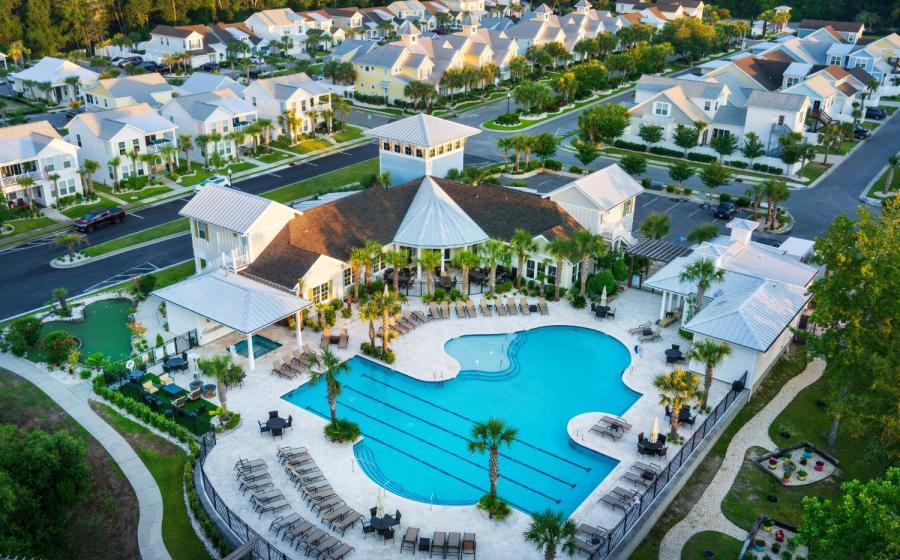
Residents enjoy exceptional amenities including a riverfront park, fishing piers, fire pits, a modern clubhouse with fitness center and cinema lounge, tropical pool complex, and exclusive beach access at a private Sunset Beach clubhouse. Homes range from $499,000 to $3,000,000 luxury waterfront estates, with custom designs available up to 4,000+ sq. ft. and prime waterfront lots with private docks.

Announced Parkway Extension Promises New Connectivity

The Carolina Bays Parkway Extension, newly announced for the region, is set to transform future access to Myrtle Beach, Wilmington, and the greater coastal North Carolina area. This major infrastructure project will eventually provide a safer, faster alternative to US-17 and is expected to increase property value and visibility in the Brunswick County real estate market. For future and current Kingfish Bay residents, the extension means upcoming benefits including easier commutes, enhanced investment potential, and increased visibility for new retail, dining, and cultural options, all while maintaining the peace and exclusivity of the community.

Coastal Wellness & Resort-Style Amenities

Living at Kingfish Bay means embracing a wellness-focused lifestyle. Residents enjoy morning walks by the water, evening gatherings at the private beach clubhouse on Sunset Beach, and a vibrant social atmosphere that supports long-term health, relaxation, and connection.

Key Advantages of Kingfish Bay, Calabash NC

  • Waterfront homes for sale in coastal North Carolina
  • Last available prime gated homesites with dock options
  • Announced Carolina Bays Parkway Extension for improved future access
  • Exclusive Sunset Beach private clubhouse
  • New homes close to Myrtle Beach, Wilmington, and Ocean Isle Beach
  • Custom home designs for every lifestyle
  • Resort-style amenities for wellness and social connection
  • High-demand Brunswick County real estate market

With its final phase now underway, Kingfish Bay stands as Brunswick County’s premier address for luxury waterfront living in Calabash, NC. To schedule a tour or learn more about available waterfront homes for sale, visit: www.kingfishbaydevelopment.com


Subscribe to Real Estate