
From Uncertainty to Reassurance: How a Small Heart Monitor and Ablation Procedure Helped One Father Conquer the Unknowns of Atrial Fibrillation
(NewsUSA) - In 2018, then-52-year-old Todd Repass Jr. stood up after a meal and immediately knew something was wrong. It was terrifying. He felt weak, short of breath, and, at times, dizzy. The eventual diagnosis – atrial fibrillation (AFib) – kicked off a nearly seven-year health journey, during which he leaned on his son, an employee of medical device manufacturer, Medtronic, for guidance.
“You just have no clue what’s happening to you,” Todd recalls. “So, you’re confused, you’re scared.”
Atrial fibrillation, commonly called AFib, is an irregular heart rhythm that occurs when the heart’s upper chambers beat out of rhythm. It impacts more than 10 million U.S. adults and can increase the risk of blood clots, stroke, heart failure, and other heart-related complications.1 For Todd, receiving the diagnosis brought a new level of uncertainty as he tried to understand what AFib meant for his health and daily life.
Over the next several years, Todd tried medication, cardioversion (a procedure intended to restore a regular heartbeat), and lifestyle changes, including adjustments to his diet and sleep schedule. Despite these efforts, his AFib remained unpredictable and disruptive. During episodes, he often felt weak and short of breath and struggled with everyday activities – even short walks with his four golden retrievers. Some of Todd’s AFib episodes would last continuously for weeks or even months at a time.
Throughout those years of uncertainty, Todd’s wife was a constant source of support. She stood beside him through the uncertainty of his AFib episodes, doctor visits, cardioversions, procedures, and recovery—caring for him through the difficult days while continually encouraging him to keep looking for answers.
“My wife was there for me through all of it,” Todd says. “When I was scared, frustrated, or just didn’t feel like myself, she was the person beside me every day.”
While cardioversions and medication helped lessen some of the symptoms, his AFib remained elusive. His doctors used in-office electrocardiograms (EKGs) and prescribed externally worn, temporary Holter monitors. These external cardiac monitoring solutions were prescribed for short durations, often less than 30 days at a time, and were often not able to record his unpredictable AFib episodes. The uncertainty remained.
“The AFib diagnosis is not necessarily the hardest part,” Todd says. “It’s the day-to-day uncertainty that comes with not knowing how to track what’s happening.”
Determined to better understand and manage his condition, Todd began doing his own research, leaning on his son along the way.
“He was a reassuring best friend all the way through it,” Todd says. “He helped me better understand the technologies that were available and pointed me toward information I could research and discuss with my doctors. Having someone I trusted who understood the medical device field gave me both knowledge and reassurance throughout the journey.”
After discussing options with his care team, Todd’s cardiologist recommended the Medtronic LINQ II™ insertable cardiac monitor (ICM). Placed just under the skin, the small device (about 1/3 the size of an AAA battery) continuously monitors the heart and transmits abnormal heart rhythm information to a patient’s care team.
The outpatient procedure took only a few minutes. Afterward, he downloaded the MyCareLink Heart™ mobile app, which allowed him to record symptoms on his cell phone when he felt dizzy, weak, or out of rhythm.
“The app was easy to use and gave me peace of mind knowing I had a way to capture what I was feeling when it happened,” Todd says.
For the first time, Todd no longer had to hope an episode would occur during a scheduled test. When he felt symptoms, he could record them in the app, and his care team could compare what he felt with the heart rhythm information collected by the device.
For several months, the ICM recorded episodes of AFib and other abnormal heart rates, providing Todd’s care team with additional diagnostic information to help inform a more targeted treatment strategy. Doctors recommended Todd would be a strong candidate for a type of cardiac ablation procedure called pulsed field ablation (PFA) using the Medtronic Affera™ mapping and ablation system and the Sphere-9™ catheter. The all-in-one dual-energy catheter uses both short electrical pulses and radiofrequency energy to target heart tissue responsible for the abnormal electrical signals that cause AFib.
More than a year after his ablation procedure, Todd is AFib-free, and his LINQ II ICM continues to monitor. Not only does Todd feel better, but the continued monitoring also provides reassurance that his AFib is under control while giving his care team a consistent view of his heart rhythm activity.
Today, Todd is enjoying life with his family and spends far less time worrying about his AFib. He exercises, participates more fully in family activities, and spends plenty of time walking and caring for their golden retrievers. He no longer organizes his entire day around trying to prevent a possible AFib trigger.
Looking back, Todd credits the strength of his family with helping him navigate the years of uncertainty that came with AFib. His wife provided the constant love and care that carried him through the most difficult periods, while his son empowered him to ask questions, better understand the available technologies, and have more informed conversations with his healthcare team. For Todd, their support reinforced how important a strong support system can be when facing a long and uncertain health journey.
“Getting the LINQ II ICM and the ablation with the Affera system were the best health decisions I’ve ever made in my life,” Todd says.
If you have AFib or are experiencing symptoms of an irregular heart rhythm, such as dizziness, shortness of breath, fluttering, racing, or pounding feeling in the chest, talk to your doctor about diagnosis and treatment options. This is one patient’s experience; results may vary. Learn more about atrial fibrillation and available treatment options.
Possible risks associated with the implant of the LINQ™ Family ICMs include, but are not limited to, infection at the surgical site, device migration, erosion of the device through the skin and/or sensitivity to the device material. For important safety information, see: https://www.medtronic.com/us-en/patients/treatments-therapies/insertable-heart-monitors/getting-monitor/important-safety-information.html.
Possible risks associated with Sphere-9 may include stroke, pericardial tamponade, narrowing of pulmonary veins, damage to the blood vessels in your groin area, and a serious but extremely rare risk of atrio-esophageal fistula. Other risks include irritation, infection, or bleeding occurring where the catheter was inserted; the heart could be punctured; fluid may build up around the heart, or in rare cases death may occur. Please talk to your doctor to see if this treatment is right for you. For important safety information, see: https://www.medtronic.com/en-us/l/patients/treatments-therapies/catheter-ablation-for-atrial-fibrillation.html#benefits-of-pulsed-field-ablation

 - With U.S. gasoline prices still hovering around $4.00 per gallon,
 - For decades, companies trying to reach consumers followed a familiar formula: create a compelling story, earn or secure media exposure, and make sure the information could be found through search engines.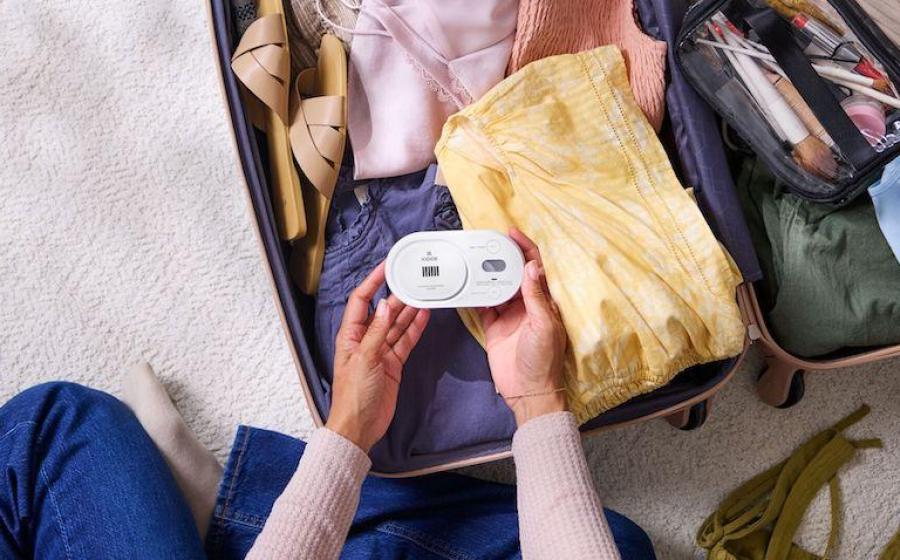
 - As summer winds down, travelers looking to squeeze in one more getaway may find that post-Labor Day trips come with plenty of perks. Fewer crowds, lower rates and crisp late-summer weather can make September an ideal time to travel. But even as the busy season slows down, safety and peace of mind should remain a priority.
 - Quantum information science, engineering, and technologies (QISET) is in its second phase, now rapidly evolving from lab-based projects to real-world applications that are impacting the strategies and finances of the federal government and the private sector, according to experts at the Special Competitive Studies Project (SCSP), a nonprofit and nonpartisan initiative with a goal of making recommendations to strengthen America's long-term competitiveness in artificial intelligence.
 - If the thought of a chemical peel conjures images of red, flaky downtime, RoC Skincare is here to rewrite the narrative. The brand’s new
 - Several seasonal celebrations are nearly upon us, but an unwelcome time of year also awaits—flu season.
 - September marks the beginning of a new school year, and for many students, it also marks the first time they will live away from home. College students are packing up, heading to campuses in other cities and states, and beginning new chapters of their lives. For the friends they leave behind, that can mean suddenly being hundreds of miles—and sometimes a time zone—apart.
 - There is a piece of good public health news that deserves more attention: youth tobacco use in the United States has
 - On September 11, America marks the 25th anniversary of the day 19 terrorists hijacked four airliners and turned them into weapons against our country. It was among the darkest days in our history. Yet from that darkness came a remarkable display of light.