x

Toys for Tots’ Operation Turn the Page Unlocks Futures Through Books

(NewsUSA) - Across the Nation, millions of children are preparing to head back to school—filled with excitement, opportunity, and promise. But for far too many children, the year begins with a challenge: limited access to the books and educational resources that are essential to academic success.

That is the reality the Marine Toys for Tots Literacy Program is working to change through Operation Turn the Page—a nationwide back-to-school initiative built on a simple but powerful belief: Give a Book, Unlock a Future. 

The Toys for Tots Literacy Program has provided more than 63 million books and educational resources to underserved children since 2008, helping children strengthen literacy skills, stay engaged in learning, and discover the joy of reading.

Yet, the need to support literacy initiatives remains significant across the Nation, where low-income communities may have a single age-appropriate book available for every 300 children. Without access to books, many students struggle to develop the literacy skills needed for academic success, and summer learning loss can make the transition back to school even more difficult. 

That’s why Operation Turn the Page focuses on helping children in need stay connected to learning throughout the summer and return to the classroom ready to thrive.

“A single book may seem like a small gift, but for a child impacted by summer learning loss, it can open the door to possibilities they never knew existed,” says Lieutenant General Jim Laster, U.S. Marines (Retired), President and CEO of the Marine Toys for Tots Foundation. “When children living in low-income communities have access to books throughout the summer, they return to school more confident, engaged, and prepared to learn. When you give a book, you unlock a future.”

Operation Turn the Page’s impact begins long before the first school bell rings and is measured not only in books distributed, but in the moments that books create. Disadvantaged children across the country receive the resources they need to keep reading, learning, and growing as they prepare for a successful return to the classroom long before the first school bell rings.

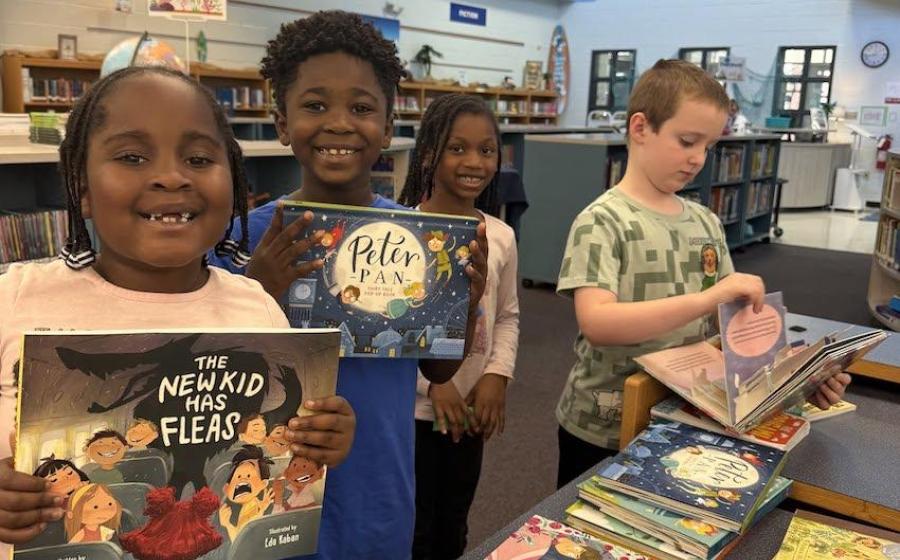
“For many of our students, receiving these books means more than just reading—it’s the beginning of their first home library and a lifelong love of learning,” said a Freedom Trail Elementary teacher after a book distribution event.

At United Elementary, more than 400 books found their new homes with students, creating excitement that extended beyond the classroom. “With over 400 new books in the hands of our students, we’re seeing excitement, pride, and a growing love of reading both in school and at home,” staff shared.

At Entheos Academy, “One student’s face lit up with pure wonder when she found a book about baseball—proof that the right book can spark a lifelong love of reading,” a teacher exclaimed.

These stories illustrate Operation Turn the Page’s mission: ensuring access to books for disadvantaged children over the summer so they can enter the classroom with confidence and a stronger foundation for success.

As children prepare to return to school, supporters have the power to help write the next chapter of their success story. A single book can inspire a love of reading, strengthen literacy skills, and help a child start the school year ready to learn. By supporting Operation Turn the Page, donors are doing more than giving a book—they are helping disadvantaged children turn the page on summer learning loss and toward academic success and a brighter future.

Because when supporters Give a Book, they Unlock a Future.

To learn more or donate, visit: https://www.toysfortots.org/programs/
BookTrib’s Bites: Hidden Truths, Ancient Secrets and the Search for Answers

(BookTrib) - “Palm Beach Confidential” by Susannah Marren
In the latest entry in her Palm Beach novel series, Susannah Marren returns to the glittering, watchful world of Palm Beach, where appearances matter, and family secrets have a way of surfacing at the worst possible time. Lucinda Barrows has spent decades building a dazzling life of wealth, status and social influence, but her carefully controlled world begins to crack when mysterious letters arrive from Kesgrave, the Florida Panhandle town she thought she had left behind.

Her three daughters are already caught in their own storms: Maribelle is estranged from Raleigh after a devastating betrayal, Caroline is trying to hold the family business together, and Raleigh is facing a brutal divorce while being drawn into a risky new romance. Part family drama, part slow-burn mystery, “Palm Beach Confidential” explores what women hide, what they protect and what it costs to keep a polished life intact.

Purchase at https://tinyurl.com/palm-beach-confidential. 

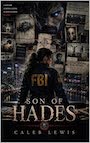
“Son of Hades” by Caleb Lewis

Alexandros Nyktos is grieving, furious and very dangerous. After his undercover detective wife is murdered by the Moretti Mafia, Alex — the demigod son of Hades — tears through the criminal empire seeking revenge. But when he reaches mob boss Victor Moretti, someone has beaten him to the kill.

The twist? Moretti was actually Dionysus, the ancient Greek god of wine, and someone has discovered how to murder immortals.

Now Alex is both suspect and reluctant guide for FBI Special Agent Morgan Hale, whose investigation pulls her into a hidden America populated by gods, vampires, demons and other legendary beings living behind modern identities. When another god turns up dead, the uneasy partners must uncover what connects the victims before the killer strikes again.

Blending urban fantasy, police procedural and slow-burn romance, “Son of Hades” brings ancient rivalries and divine grudges into a dark, dangerous modern underworld.

Purchase at https://a.co/d/00T5kpWj.

“In Search of the Optimal Human Diet: A Layperson's Guide to Nutritional Science” by Jonathan Spitz
In a world of competing diet plans, contradictory headlines and nutritional quick fixes, Jonathan Spitz goes back to a more fundamental question: What does the science actually tell us?

“In Search of the Optimal Human Diet” traces more than two centuries of nutritional research, from an eighteenth-century experiment on scurvy through the discovery of proteins, carbohydrates, vitamins and minerals to today’s understanding of metabolism, fiber and the gut microbiome. Along the way, Spitz brings the history to life through the scientists, experiments and occasional wrong turns that shaped what we know about food and health.

The evidence ultimately leads Spitz to advocate a whole-food, plant-based diet, with Dr. Michael Greger’s “Daily Dozen” providing a practical food guide. Extensively documented and supplemented with nine appendices, the book is both an accessible scientific history and a useful reference for readers who want to make evidence-based dietary choices rather than follow trends.

Purchase at https://man-eating-plants.com/.  

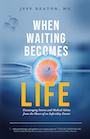
“When Waiting Becomes Life” by Jeff Deaton, MD 

“When Waiting Becomes Life” gently illuminates the often-unseen emotional landscape of infertility — a journey many walk in silence. Drawing on heartfelt, real-life stories from women and couples who have faced failed cycles, loss and years of uncertainty, Dr. Jeff Deaton blends compassionate medical insight with deeply human narrative. Each chapter offers not only the raw honesty of lived experience but also practical, encouraging advice that helps readers process grief, confront shame and navigate complex treatment decisions with greater clarity and confidence.

Readers praise the book for its warmth and wisdom, noting how Deaton’s balanced mix of hope, science and empathy makes even the most difficult moments feel shared rather than endured alone. Whether you’re living the struggle or supporting someone who is, this book offers solace, strength and a reminder: waiting isn’t the whole story — growth and resilience can be part of the journey too.

Purchase at https://tinyurl.com/when-waiting-becomes-life.

Double the Hope on Lung Cancer Research: $400,000 to Outsmart Lung Cancer

(Erika Braaksma ) - While World Lung Cancer Day was recognized on August 1, the urgent need to raise global awareness for those affected by the disease and to accelerate the search for a cure remains year-round. With this ongoing mission in mind, Lung Cancer Foundation of America (LCFA) and the International Association for the Study of Lung Cancer (IASLC) are observing the month by awarding $200,000 to two of the field's most promising young scientists. This investment addresses a critical reality in oncology: too often, brilliant research ideas stall not because they lack vision, but because they lack resources. By providing this funding, LCFA and IASLC are ensuring these researchers have the momentum they need to turn today’s innovative ideas into tomorrow’s life-saving breakthroughs.

The two funded projects take aim at two of the toughest questions in the fight against the disease: how to catch lung cancer earlier, and how to stop it from outsmarting the very treatments designed to beat it. Both are essential to the same goal, helping patients live longer, better lives.

The Early Career Researcher (ECR) grant program gives emerging scientists the fuel they need to secure a major independent research award, which can be a launching pad for a career. These researchers aren't just studying the future of lung cancer science; they're building it.

This year's recipients, selected for the originality of their proposals and their potential to change patient outcomes, are Dr. Jared Mayers of Fred Hutch Cancer Center and Dr. Jaime L. Schneider of Dana-Farber Cancer Institute.

The timing could not be more urgent. Competition for research dollars grows fiercer every year, even as lung cancer claims a life in the United States every 4.2 minutes. When bold, early career investigators are handed real, independent funding, their most innovative ideas don't stall on a shelf. They move forward, and they change what's possible in oncology.

"Supporting early-career investigators is not just a strategic priority. It is a necessity for the future of oncology," said Kim Norris, co-founder and president of LCFA. "By investing in these researchers, we are accelerating the pace of discovery and ensuring that promising ideas in metabolic tracking and drug resistance can move from the laboratory to the clinic, where they are needed most."

Meet the Award Recipients

Dr. Jared Mayers, Fred Hutch Cancer Center: Hunting the hidden influencers inside the lung. Dr. Mayers is investigating how the naturally occurring bacteria living in our lungs may quietly shape the development of lung cancer. Because these bacteria exist in such tiny amounts, they've long been nearly impossible to study. So Dr. Mayers is building the tools to see them by developing highly sensitive new techniques to capture and analyze how these microbes behave inside lung tissue. By mapping how they contribute to cancer, his team hopes to uncover entirely new ways to stop the disease before it ever starts. 

Dr. Mayers says his inspiration is simple: "We don't get new drugs, we don't get new therapies, we don't get longer lives, better quality lives, more time with family unless we invest in the upfront groundwork.”

Dr. Jaime L. Schneider, Dana-Farber Cancer Institute: Cutting off cancer's escape route. Dr. Schneider is decoding how lung cancer cells learn to survive and keep growing even after treatment. Her focus: how these cells manage their energy and where that system has a weak link worth exploiting. Her goal is to design new, more effective therapies that keep cancer from adapting, offering better and longer-lasting options for patients whose disease has grown resistant to standard chemotherapy and targeted treatments.

 "I was simply blown away by the tremendous arsenal of new drugs that had just come out that were really changing patient lives," said Dr. Schneider, describing what drew her to thoracic oncology.

LCFA and IASLC invite the community to go behind the science with all of the LCFA/IASLC ECR grant recipients. Visit these researchers’ profiles and video insights into their lab work at LCFA’s Meet the Researcher.

The Multiplier Effect: Small Grants, Outsized Impact

LCFA’s Early Career Research Grant Program is known for a remarkable "multiplier effect" currently at 13X return on investment. By providing the first spark for transformative science, the program has awarded 25 grants totaling $4.6 million, funding that has since grown into more than $50 million in additional grants from other organizations building on LCFA-supported research. That track record means Dr. Mayers and Dr. Schneider aren't just receiving funding, they're gaining the foundation to secure the major, long-term support their life-saving work deserves.

This $400,000 investment underscores LCFA and IASLC’s ongoing commitment to accelerating the pace of discovery for patients everywhere. For more resources and information about lung cancer, visit lcfamerica.org.

Back-to-School Driving: Don’t Let That Windshield Chip Become a Bigger Problem

(NewsUSA) - Your back-to-school checklist is already long. That chip in your windshield shouldn’t stay on it.
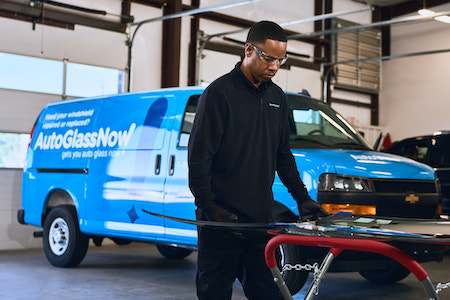
Back-to-school season means busy mornings, packed schedules, school drop-offs, after-school activities and plenty of time on the road. With attention focused on getting everyone where they need to be, it’s easy to put off something that seems minor, like that small chip in your windshield.

But windshield damage doesn’t wait for your schedule to slow down.

Not all windshield damage is the same. A small white dot on the glass and a long line running across your field of view are both problems, but they call for very different responses. The type of damage, where it sits on the glass, and how long it has been there all determine whether a technician can fix it in about 30 minutes or whether the entire windshield needs replacing.

Chips vs. Cracks: What Is Your Windshield Trying to Tell You?

You hear the unmistakable ping of a rock hitting your windshield. You look around, spot a tiny mark in the glass and think, That doesn’t look so bad. And sometimes, it isn’t …yet.

A chip is damage centered around a single impact point. Something struck the glass hard enough to break away a small piece of the outer layer, but the damage hasn’t started traveling. The good news? Chips caught early are the best candidates for repair, making that little mark worth addressing before it becomes something bigger.

A crack is a line of separation that extends away from the impact point, or that appears on its own from stress. Cracks can be short and stable or long and fast moving, depending on location, temperature swings, road vibration and moisture.

 And if you’ve ever wondered why windshield damage seems to come in so many different shapes, there’s actually a name for many of them. A bullseye creates a circular pattern around the impact point, much like a dartboard. A star break sends small cracks radiating outward, while a combination break includes characteristics of both. You may also spot a half-moon, which forms a partial circle, or a pit, a small surface nick without a larger pattern around it.

Cracks vary too. Stress cracks appear without any impact at all, often triggered by sudden temperature change, such as a frozen windshield blasted with hot defroster air. Edge begin near the perimeter of the windshield and tend to spread quickly, while floating cracks sit farther into the glass and grow outward from an original point of damage.

Why Size Isn’t the Whole Story

Here’s the tricky thing about windshield damage: small doesn’t always mean harmless. A tiny chip may look like no big deal, but road vibration, moisture and temperature changes can quickly give it room to grow. And where the damage sits matters just as much as its size. A chip or crack in the driver’s line of sight can affect visibility, while damage near the edge tends to spread faster. Even damage near windshield-mounted cameras deserves attention, since many newer vehicles rely on those cameras for features like lane departure warnings, forward collision alerts and adaptive cruise control. Bottom line? That little chip may be trying to tell you more than you think.

The Best Time to Fix It? Before It Gets Worse.

Here’s the good news: if caught early, many windshield chips can be repaired in as little as 30 minutes. Side and rear window damage is a different story, those always require replacement. Either way, getting the damage checked sooner rather than later is your best move.

Because one thing windshield damage rarely does is fix itself. That little chip you’ve been ignoring? It has bigger ambitions. Potholes, car washes, road vibration and temperature changes can turn a small, repairable chip into a crack that requires a full windshield replacement.

Not sure whether your windshield needs a repair or replacement? Auto Glass Now offers free damage inspections and an honest recommendation, with no-fee mobile service available at most locations, making it one less thing to juggle during an already busy back-to-school season.

Get a free windshield quote online or call 1-888-4-FIX-GLASS.

It Starts With a Game: How Gaming Became the Front Door to Friendship

(NewsUSA) - Gaming has transformed over the past three decades. In 1999, fewer than one in five players reported playing online, according to the Entertainment Software Association (ESA), and today, nearly 90 percent do. As gaming has become increasingly social, it has evolved into a digital third place where people come together to play, connect, and build community.

The ESA also found that 67 percent of Americans ages 5 to 90 play video games at least an hour a week, and across the country, friendships and relationships that begin over a game controller are increasingly spilling off the screen and into people's lives. Discord has become the digital living room where those friendships actually live and grow — where players text, talk, and video chat, both during games and in the stretches between them. Discord broadens the cultural role of “digital third places” beyond a single game to a space where all your gaming friends play.

Discord, which is free to join, is different from other platforms — there are no algorithmic feeds, no broadcasting of your life, and no endless scrolling. People connect through 1:1 Direct Messages, Group Direct Messages, and Servers, which are invite-based communities organized around a game, a friend group, or a shared interest. Activity happens in small, private spaces among friends, where high-quality streaming and voice chat across devices let people hang out together as naturally as if they were in the same room. Discord now counts more than 90 million daily active users worldwide, and gaming remains the center of gravity: 89% of Discord users play games. 

Gene Ludington from Pennsylvania has gamed with the same group of friends for more than 20 years. The tools have changed, but the group hasn't. “We can voice chat, video chat, text, share memes, videos, pics, and gifs, or stream what we're most excited about,” he said. For his circle, Discord has “become the communication glue that holds us all together.”

That glue is critical for maintaining friendships across distances. And nobody understands this better than veterans. Stack Up, a nonprofit founded in 2015 to support military veterans through gaming, has built its community on Discord — with weekly game nights, town halls, and a peer support channel staffed around the clock by trained volunteers. Because the community spans time zones, someone is always available to connect.

Video games offer a shared activity and a low-pressure reason to keep showing up, similar to a Saturday softball league or a weekly pickup game. According to research by CivicScience, adults who play team sports report better social and mental health outcomes than those who play individually, and similarly, a recent study from researchers at Imperial College London found that gamers feel less alone than non-gamers.

It’s no wonder that gaming has grown to look so much like traditional athletics. When the National Association of Collegiate Esports (NACE) formed in 2016, only seven colleges and universities had varsity esports programs. Today, NACE supports 300 programs across the country, helping students compete, earn scholarships, and build lifelong friendships with teammates and the broader esports community.

The bonds created through gaming often transcend the game itself. When Faith Hobart from Kansas City, Kansas got married last January, many of the guests in the room were people the couple had first met through a video game.

Hobart and her husband connected on January 1st, 2021, and added each other on Discord. It was there that they spent hours talking about their futures, playing together, and ultimately falling in love. Four years to the day later, they married, and many of the people in the online community they'd built were there in person. “They saw our relationship grow from friends, to developing crushes, to dating, getting engaged, and finally getting married,” she said.

The guests weren’t there because of a game. They were there because conversations that started on Discord became a community, then friendships, then — for the Hobarts — a marriage.

Getting started is easy. Discord is free to download on phones, consoles, or desktops, and setting up an account only takes a few minutes. From there, you can connect with your friends that you already game with, or join an existing Server built around the games and interests you love. Joining a Server takes just one click — no matter if it's a link a friend sends you, or one you find by browsing Discord's directory of communities. Whether you’re looking to reconnect with your longtime crew or make your first gaming friend, the front door to your digital third space is open. 

The Challenge of Hybrid Security Threats

(NewsUSA) - Modern conflict goes beyond troops and physical weapons. Warfare tactics now include cyber attacks, disinformation campaigns, election interference, and economic coercion.

Dr. Teija Tiilikainen, director of the European Center of Excellence for Countering Hybrid Threats (Hybrid CoE), outlined hybrid security threats in an interview on NatSec Tech, a podcast produced by the Special Competitive Studies Project (SCSP) covering emerging technology and national security.

Hybrid CoE defines hybrid threats as "a mixture of different tools used against democracies, against the democratic principle, against democratic practices in our societies to undermine trust in government," Tiilikainen said — tools used by authoritarian regimes to shore up their own power. What sets them apart: "The whole logic of these threats is to surprise us unprepared." The toolkit spans cyber and information operations, election interference, instrumentalized migration, and attacks on critical infrastructure from energy grids to data cables.

Artificial intelligence has raised the stakes. AI "is a huge tool to affect the so-called cognitive sphere, our understanding of reality," Tiilikainen said. When threat actors deploy it ahead of elections or on social media, "we don't know with whom we are communicating." Increasingly, "we don't necessarily recognize the real actors from AI produced actors." AI may eventually help defenders, she noted, but for now attackers hold the advantage.

Tiilikainen singled out the information space. In the Russian war against Ukraine, "How do we see the war, who is the victim, who is the responsible actor? This tends to vary not only in Europe, but also outside Europe, very much due to efficient and successful Russian disinformation campaigns." Information is "a very dangerous tool in the hands of hybrid threat actors," she said, amplifying every other tool they use.

Russia, China, Iran, and North Korea are the principal state actors, she said, often working through proxies: criminals, hackers, extremists, and unwitting citizens. Attribution is "very, very difficult," and "this is one of the assets that the threat actors are using."

Countering them "all starts with our broad societal resilience," Tiilikainen said. More proactive measures include international sanctions and publicly calling out responsible states. "China, for instance, is still quite keen on maintaining its reputation as a responsible international actor," she said.

Education matters too. Tiilikainen pointed to the Nordic and Baltic states, where an informed public helps small countries defend themselves, and to Ukraine and Taiwan, which have used transparency to expose and correct disinformation. The private sector must also engage, since much critical infrastructure is privately owned.

Hybrid threats are dangerous because they are hard to see, and they test vulnerabilities with larger conflict in mind. "We have the old saying that this is about preparing the battlefield," she said. "From that point of view the threat to democracies can be very existential."

Progress has been made — "I see resilience being strengthened" — but more is needed to prepare for "the malign use of modern technologies." Failure to do so, she warned, would "weaken the credibility of the democratic principles."

Visit scsp.ai to learn more.

Health In Hand Launches New Tool to Help Consumers Spot AI-Generated Health Videos

(NewsUSA) - As millions of Americans turn to social media, online videos and AI-driven platforms for health information, the Health In Hand Foundation is launching a new resource to help consumers navigate an online environment where not everything they see is real. 

Health In Hand today released “How to Spot an AI-Generated Health Video,” providing practical, accessible guidance for evaluating health videos and claims before liking, sharing, following advice, or making a purchase. 

Why Evaluating Online Health Information Matters

The resource comes as Americans increasingly seek health information online. According to recent research, more than one-third of Americans get health information from social media and 1 in 5 use AI chatbots. At the same time, more than half of consumers say it has become difficult to know which sources to trust.

As AI-generated content becomes more sophisticated, some videos are designed to resemble healthcare professionals, medical experts, or trusted wellness influencers, making it increasingly difficult for consumers to distinguish credible information from misleading or fabricated claims.

The new Health In Hand resource is intended to support safer, more informed self-care decisions, encouraging consumers to pause and evaluate the information they encounter rather than relying solely on how professional or convincing a video appears. 

"Consumers today are navigating a health information environment unlike anything we've seen before. An AI-generated video can look professional, sound credible, and spread to millions of people within hours," said Mary Leonard, Executive Director of the Health In Hand Foundation. 

"Health In Hand is committed to helping consumers separate fact from fiction,” Leonard added. “Our goal is not to make people distrust everything they see online. It's to give them practical tools to ask the right questions, verify sources, and make informed self-care decisions with confidence for themselves and their families."

Think Before You Trust: Three Questions Every Consumer Should Ask

The tool starts with three simple questions consumers can use to evaluate online health content.

Does the video look or sound artificial? Strange blinking, unusual mouth movements, robotic speech, distorted background text, or visuals that appear unnaturally smooth can sometimes indicate AI-generated content. However, Health In Hand emphasizes that appearance alone is not enough to determine whether information is trustworthy.

Can you verify who is speaking? Consumers should look for a real name, professional credential, or organization and determine whether the person can be verified outside social media. A clinic, hospital, or professional organization website may provide useful confirmation.

What is the video trying to sell? Consumers should be cautious when a video promotes a miracle cure, unrealistic results, or a single urgent solution. Health claims should be compared with information from trusted health sources.

Five Red Flags That a Health Video Deserves a Second Look

Next, the tool highlights five red flags consumers should watch for. Among them are videos that look unnaturally perfect, with faces, voices or movements that seem slightly off despite polished production. Another warning sign is an apparent expert who relies on staged visual cues, such as a white coat, generic certificates, or vague titles, to create a sense of authority without providing verifiable credentials.

Consumers should also be cautious of health messages that promise a cure, suggest replacing a current medicine, or guarantee dramatic results with little or no evidence. Urgency is another potential red flag. Statements such as “limited time” or “act now,” particularly when paired with an immediate purchase link, can be pressure tactics rather than indicators of trustworthy health information.

Finally, consumers should take a closer look at dramatic before-and-after results. Claims involving rapid weight loss, instant improvements, or seemingly perfect transformations may be edited, exaggerated, or fabricated.

Helping Consumers Navigate the Future of Digital Health Information

As artificial intelligence continues to transform how health information is created, shared, and consumed, Health In Hand is expanding its efforts to help consumers evaluate what they see online and make safer, more informed self-care decisions for themselves and their families. 

The Foundation's new tool is part of its broader mission to provide trusted, evidence-based self-care education while helping consumers recognize and avoid misleading health claims online. The "How to Spot an AI-Generated Health Video" tool is available now at HealthInHand.org.


Bring Hotel Luxury Home with Better Bedding

(NewsUSA) - A great night's sleep doesn't always require a luxury hotel reservation. Increasingly, homeowners are discovering that one of the simplest ways to create a more comfortable sleep environment is by upgrading the quality of their bedding.

Premium cotton sheets have long been a hallmark of upscale hotels, offering a soft, breathable feel that helps promote restful sleep. Today, that same experience is becoming more accessible through thoughtfully crafted bedding designed for everyday use.

One example is the Bedsure PureWoven™ Giza Egyptian Cotton Sheet Set, created for people who want to enjoy the comfort and elegance associated with luxury hospitality. Made from 100% authentic hand-picked Giza long-staple Egyptian cotton, the sheets are verified through BV-certified batch No. 5625021-0005 and official CEA accreditation (Certificate No. 1657), giving shoppers added confidence in the authenticity of the material.

The smooth sateen weave delivers a silky feel while remaining durable enough for everyday living. Unlike many fabrics that wear quickly, the stronger long-staple cotton fibers help resist pilling, maintain their vibrant appearance through repeated washing, and provide lasting comfort over time. The collection was also recognized with the iLUXURY AWARDS 2026, highlighting its combination of quality craftsmanship and long-term value.

Comfort goes beyond softness. The breathable sateen construction naturally promotes airflow, helps wick away moisture, and regulates temperature throughout the night. Whether you're a warm sleeper or simply looking for year-round comfort, the fabric is designed to stay comfortable across changing seasons without feeling overly warm or too cool.

For households with pets, durability can be just as important as comfort. The sheet set's snag-resistant weave offers additional resilience against everyday wear, including pet claws, making it suitable for primary bedrooms, guest rooms, or any sleep sanctuary throughout the home.

The bedding is also made with wellness in mind. It is OEKO-TEX® certified (BJ025 231038) and produced without added fabric softeners. Instead, a physical air-tumbling process creates a crisp yet soft feel that becomes even softer with continued use. These qualities also make the set a thoughtful gift for weddings, housewarmings, or other special occasions.

Practical design features further enhance everyday convenience. The fitted sheet includes an 18-inch deep pocket that fits mattresses up to 16 inches thick, along with 360-degree elastic and directional labels that help make bed-making quicker while keeping the sheets securely in place.

Creating a luxurious bedroom doesn't necessarily require a complete makeover. Sometimes, upgrading to high-quality bedding can make a noticeable difference in comfort, helping transform an ordinary bedroom into a relaxing retreat inspired by the world's finest hotels.

The Bedsure PureWoven™ Giza Egyptian Cotton Sheet Set is currently available on Amazon. During the August 10–23 promotion, shoppers can save up to 44%, making it an ideal time to experience luxury hotel-inspired bedding at home.

Learn more and shop the collection here.

BookTrib’s Bites: What We Survive, What We Become

(BookTrib) - “Redemption Initiative: The Good Samaritan” by C.L. Morrissey
Once, Desi Delgado was exactly the kind of criminal society feared: violent, impulsive and consumed by addiction. Eight years in prison changed the course of his life, but not the weight of his past. Now a successful businessman and co-founder of a halfway house, Desi is determined to keep others from repeating his mistakes. When a violent crime strikes close to home, he creates Redemption Initiative, a covert program that uses immersive technology to force offenders to confront the full reality of the harm they've caused. 

But can accountability be engineered? Can the process unlock the innate ability to be reformed? Can true remorse be measured and verified? In “Redemption Initiative: The Good Samaritan,” C.L. Morrissey blends crime fiction with provocative moral questions, exploring the uneasy space where punishment ends, redemption begins, and justice itself is reimagined.

Purchase at https://tinyurl.com/redemption-initiative.

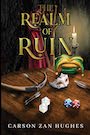
“The Realm of Ruin” by Carson Zan Hughes
In “The Realm of Ruin,” exile is not an escape from the world — it is the place where the unwanted are sent to be forgotten. For Nyla, a fiercely loyal hunter torn from her family, and Jester, a bold teenager who refuses to surrender, the Realm is a brutal wasteland of monsters, outlawed magic and secrets no one dares name. 

After barely surviving an attack on their village, they are drawn into a monster-hunting guild led by Dice, a leader whose easy smile hides hard-won experience. But each hunt reveals that the Realm is more than a prison. It is a crucible, built to test, break and transform those trapped inside it. Dark, fast-paced and filled with danger, Carson Zan Hughes’ fantasy adventure asks what survival costs — and what someone must become when the world has already cast them aside. 

Purchase at https://amzn.to/4eE87O4.

“Casey Dancer: A Memoir About Dating, Stripping, and a Little Hot Yoga” by Kristin Casey
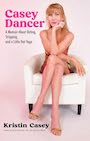
At 39, nearly a decade sober and struggling through a real estate slump, Kristin Casey returns to the work she once thought she had left behind: stripping. To her surprise, stepping back into Austin’s clubs restores not only her finances but also a sense of confidence, purpose and control.

Then she meets Lalo, a married former drug dealer whose charm and volatility pull her into an intense relationship. As romance, financial pressure and old emotional wounds collide, Casey begins confronting the patterns that have shaped her choices — especially her attraction to unavailable men and her fear of depending on anyone.

Interspersed with candid entries from her popular stripper blog, “Casey Dancer” is unfiltered, sexually frank and frequently very funny. Hot yoga becomes both refuge and metaphor as Casey works toward greater strength, firmer boundaries and a life defined on her own terms. It is a memoir about sex work, sobriety and the difficult practice of becoming fully yourself.

Purchase at https://amzn.to/4aG3jXj. 

“What the Trees Remember” by Abigail Cutter
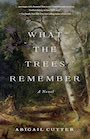
At 93, Dora Minor has spent most of her life atop Horseshoe Mountain, carrying secrets nearly as old as the trees surrounding her home. When Hurricane Camille unleashes a catastrophic flood across Nelson County in 1969, Dora faces the storm with only her two dogs — and the memories she has long avoided.

Her story reaches back to post-Civil War Virginia, where she is raised by her fiercely independent grandmother Alma in a Quaker family committed to racial equality. When Dora’s father helps open a school for Black children, the family becomes a target of violent resistance. Loss, betrayal and a horrifying act Dora witnesses as a child shape the isolated woman she becomes.

Moving between Dora’s coming of age and the night of the flood, Abigail Cutter’s deeply researched historical novel explores racial violence, moral courage and the weight of silence, while finding resilience and hard-won hope in the natural world.

Purchase at https://amzn.to/4vPefto. 

Helping Children Manage Back-to-School Anxiety

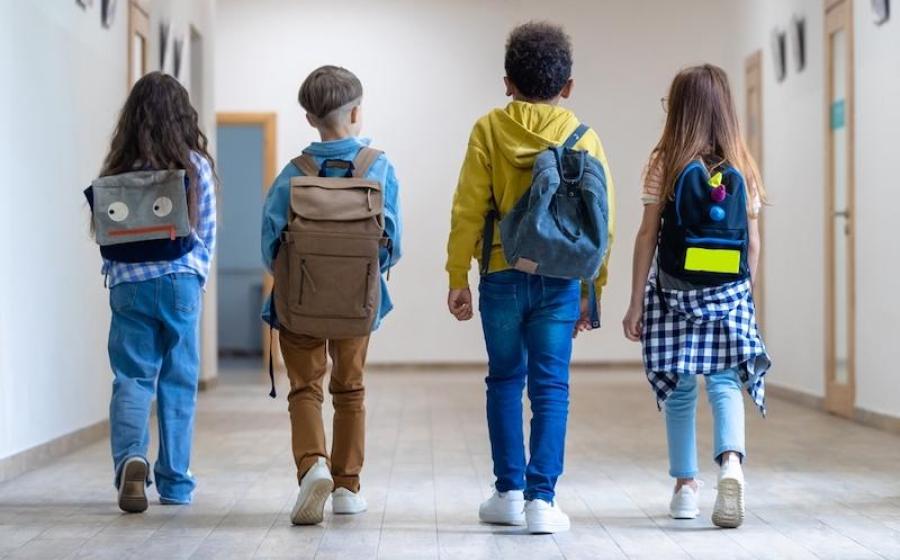
(NewsUSA) - As the summer winds down, many children look forward to the back-to-school season and the excitement of a new school year. However, for other children, transitioning to structured routines, managing academic pressures, and the fear of fitting in can cause significant anxiety. In fact, a recent survey found that 64% of children's worries are school-related.

According to cognitive neuroscientist Robert Alexander, Ph.D., assistant professor of counseling and wellness at New York Institute of Technology, “our brains are prediction machines, and our nervous systems constantly try to anticipate what will happen next, so that we can respond appropriately and stay safe. The beginning of a new school year disrupts many of those predictions all at once—old routines are broken, expectations and environments change, children are presented with new classrooms, teachers, classmates, and other daily adjustments.”

While some nervousness during transitions is developmentally normal, for children who are already prone to anxiety, returning to school can be especially overwhelming. Alexander reminds parents to know the signs, which may not always be obvious.

“Children often express anxiety indirectly,” he says, noting that common signs can include changes in sleep, irritability, difficulty concentrating, appetite changes, clinginess, or social withdrawal. As he explains, the best way to reduce anxiety is to prepare.

“Preparation helps make things more predictable and allows us to adapt to changes. Visiting the school, discussing routines, and gradually re-establishing bedtimes before classes begin can all help children feel more secure. Sleep, in particular, plays a major role in emotional regulation and stress resilience,” says Alexander.

As parents often set the emotional tone of the household, they should be aware that their reactions also matter. “Children often look to adults for cues on how they should respond to a situation. Responding with calm confidence can send a powerful message of safety,” Alexander explains.

In addition, children can practice simple calming techniques, such as slow and controlled breathing, to address overwhelming feelings in the moment. Alexander recommends a simple pattern of inhaling for four seconds and exhaling for six. However, as children head back to school, he advises parents to avoid fully eliminating their child’s anxiety, as a healthy amount can encourage resiliency.

“Confidence grows through small wins. Knowing that you can handle a situation can help you deal with future situations more effectively,” Alexander says. “When children successfully introduce themselves to a new friend, find their new classroom, or survive their first week at a new school, they learn that they are capable in those environments. But children who are prone to anxiety may need some extra help moving through those feelings successfully.”

Alexander is one of many New York Tech faculty members lending their expertise to help tackle real-world challenges. Visit nyit.edu to learn more.


Subscribe to