
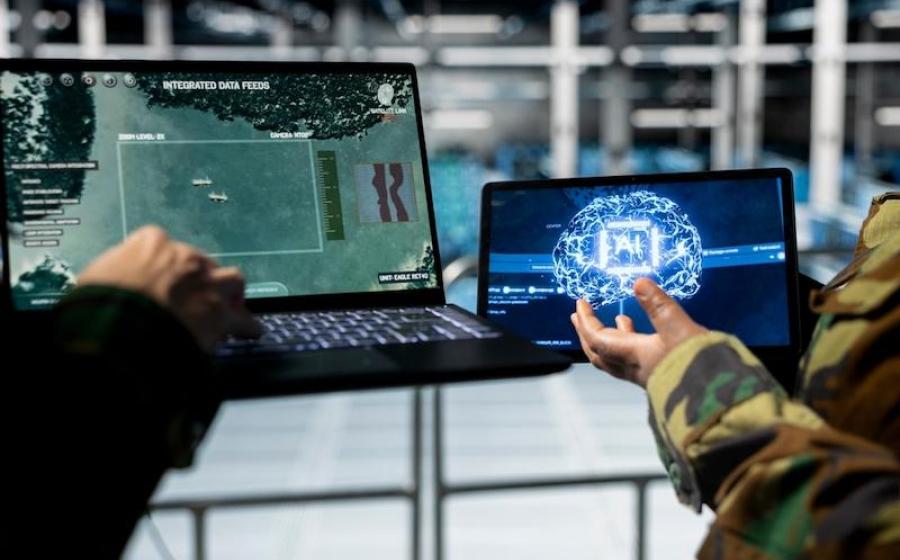
AI Joins the Army
(NewsUSA) - Artificial intelligence is likely to have a greater impact on the military’s wartime operations than on peacetime tasks, according to a new report from the Special Competitive Studies Project (SCSP), a nonprofit and nonpartisan initiative with a goal of making recommendations to strengthen America's long-term competitiveness in AI.
The new report mapped 131 Military Occupational Specialties (MOS) to their closest civilian equivalents to assess the impact of AI on army personnel. Although the sample size was small and based on private sector task classification, the data provide a foundation for further study of AI in the military, the authors wrote.
“AI won’t replace the Army’s people, but it will transform how they work,” the experts emphasized.
Common AI tasks such as gathering information and identifying objects can take on life-or-death importance in a wartime setting, when actions may be simpler and more structured, thus suited to AI, according to the report. For example, infantry officers in peacetime settings currently have approximately 25% of their work affected by AI, mainly related to administrative tasks. By contrast, AI’s wartime applications, estimated at about a third of activity (33%) for infantry include situational awareness, analyzing data, gathering information, and targeted objects or events.
Based on the report, SCSP experts offered four policy priorities to help the U.S. prepare to optimize an AI-enabled military in the future.
-Lethality. Save time by using AI on automation of administrative or routine tasks, and spend it on active training and readiness for warfighting.
-Commercial Alignment. Optimize interactions with private sector counterparts by using AI to align workflows for more efficient commercial research and development, and reserve custom development for unique wartime functions.
-Combat Investment. AI’s greatest potential military application may be in actual wartime use for information gathering, situational awareness, and targeting.
-Retention. Last, but not least, AI has potential to help address the problem of burnout in the military. Company commanders work more than 12 hours a day. Using AI for routine administrative tasks “could transform quality of life for junior officers and their families; a strategic retention tool,” the experts concluded.
Visit scsp.ai to learn more.
 - Next-generation robotics and advanced manufacturing are key to preserving American leadership in technology and AI, but the United States has fallen behind China in this essential arena, according to a new report from the Special Competitive Studies Project (SCSP), a nonprofit and nonpartisan initiative with a goal of making recommendations to strengthen America's long-term competitiveness in AI.
 - Increasing and upgrading the use of technology in government is essential, but not easy, and it takes more than money, according to Sri Ramaswamy, the Chief Innovation Officer for the NobleReach Foundation, a nonprofit organization that connects top tech talent with government needs. “It takes people, people who understand technology and how it can be applied to create efficiencies, improve service, and upgrade national security,” Mr. Ramaswamy said in a podcast for the Special Competitive Studies Project (SCSP), a nonprofit and nonpartisan initiative with a goal of making recommendations to strengthen America's long-term competitiveness in AI.
 - For years, digital marketing strategy revolved around a simple objective: rank high in search results and attract clicks to your website. But a quiet shift in search behavior is changing that equation.
 - For many small and mid-sized businesses, declining local rankings are blamed on competition, algorithm updates, or insufficient ad spend. But according to digital strategists at iLocal, the real issue is often far less dramatic — and far more fixable.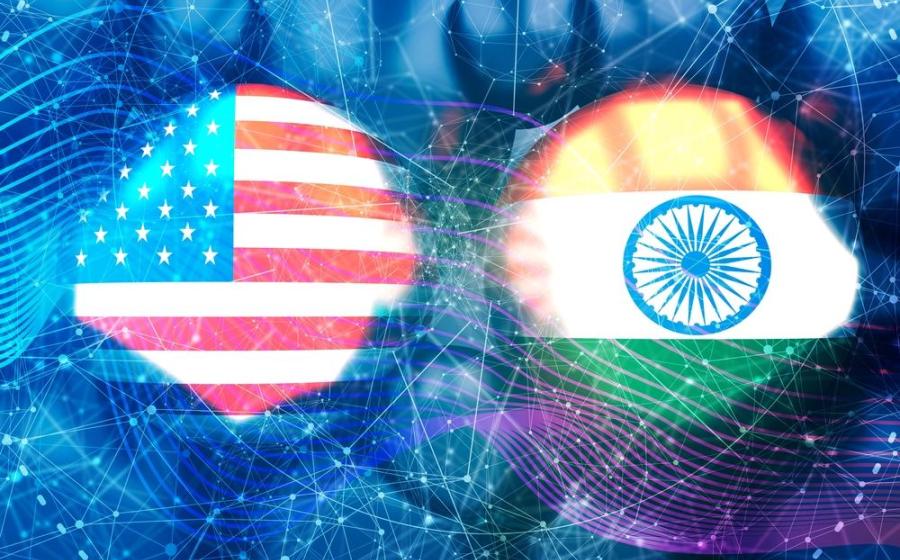
 - For both India and the United States, leadership in artificial intelligence (AI) and emerging technologies will impact not only domestic prosperity and resilience, but also their ability to establish their values and systems to define the global digital order, according to a new report from the Special Competitive Studies Project (SCSP) and ORF America.
 - A growing number of consumers are getting answers from search engines without ever clicking on a website.
 - As artificial intelligence becomes more integrated into search engines, many local businesses are discovering a troubling reality: they are no longer appearing in search results the way they once did.
 - As search engines evolve into AI-driven answer platforms, many local businesses are discovering they are no longer showing up where it matters most.
 - The Department of Defense's, now renamed the Department of War by the current administration, acquisitions, notoriously sluggish and inefficient, is undergoing a change to make its historically sluggish acquisitions system more agile and responsive.