x

It Starts With a Game: How Gaming Became the Front Door to Friendship

(NewsUSA) - Gaming has transformed over the past three decades. In 1999, fewer than one in five players reported playing online, according to the Entertainment Software Association (ESA), and today, nearly 90 percent do. As gaming has become increasingly social, it has evolved into a digital third place where people come together to play, connect, and build community.

The ESA also found that 67 percent of Americans ages 5 to 90 play video games at least an hour a week, and across the country, friendships and relationships that begin over a game controller are increasingly spilling off the screen and into people's lives. Discord has become the digital living room where those friendships actually live and grow — where players text, talk, and video chat, both during games and in the stretches between them. Discord broadens the cultural role of “digital third places” beyond a single game to a space where all your gaming friends play.

Discord, which is free to join, is different from other platforms — there are no algorithmic feeds, no broadcasting of your life, and no endless scrolling. People connect through 1:1 Direct Messages, Group Direct Messages, and Servers, which are invite-based communities organized around a game, a friend group, or a shared interest. Activity happens in small, private spaces among friends, where high-quality streaming and voice chat across devices let people hang out together as naturally as if they were in the same room. Discord now counts more than 90 million daily active users worldwide, and gaming remains the center of gravity: 89% of Discord users play games. 

Gene Ludington from Pennsylvania has gamed with the same group of friends for more than 20 years. The tools have changed, but the group hasn't. “We can voice chat, video chat, text, share memes, videos, pics, and gifs, or stream what we're most excited about,” he said. For his circle, Discord has “become the communication glue that holds us all together.”

That glue is critical for maintaining friendships across distances. And nobody understands this better than veterans. Stack Up, a nonprofit founded in 2015 to support military veterans through gaming, has built its community on Discord — with weekly game nights, town halls, and a peer support channel staffed around the clock by trained volunteers. Because the community spans time zones, someone is always available to connect.

Video games offer a shared activity and a low-pressure reason to keep showing up, similar to a Saturday softball league or a weekly pickup game. According to research by CivicScience, adults who play team sports report better social and mental health outcomes than those who play individually, and similarly, a recent study from researchers at Imperial College London found that gamers feel less alone than non-gamers.

It’s no wonder that gaming has grown to look so much like traditional athletics. When the National Association of Collegiate Esports (NACE) formed in 2016, only seven colleges and universities had varsity esports programs. Today, NACE supports 300 programs across the country, helping students compete, earn scholarships, and build lifelong friendships with teammates and the broader esports community.

The bonds created through gaming often transcend the game itself. When Faith Hobart from Kansas City, Kansas got married last January, many of the guests in the room were people the couple had first met through a video game.

Hobart and her husband connected on January 1st, 2021, and added each other on Discord. It was there that they spent hours talking about their futures, playing together, and ultimately falling in love. Four years to the day later, they married, and many of the people in the online community they'd built were there in person. “They saw our relationship grow from friends, to developing crushes, to dating, getting engaged, and finally getting married,” she said.

The guests weren’t there because of a game. They were there because conversations that started on Discord became a community, then friendships, then — for the Hobarts — a marriage.

Getting started is easy. Discord is free to download on phones, consoles, or desktops, and setting up an account only takes a few minutes. From there, you can connect with your friends that you already game with, or join an existing Server built around the games and interests you love. Joining a Server takes just one click — no matter if it's a link a friend sends you, or one you find by browsing Discord's directory of communities. Whether you’re looking to reconnect with your longtime crew or make your first gaming friend, the front door to your digital third space is open. 

The Challenge of Hybrid Security Threats

(NewsUSA) - Modern conflict goes beyond troops and physical weapons. Warfare tactics now include cyber attacks, disinformation campaigns, election interference, and economic coercion.

Dr. Teija Tiilikainen, director of the European Center of Excellence for Countering Hybrid Threats (Hybrid CoE), outlined hybrid security threats in an interview on NatSec Tech, a podcast produced by the Special Competitive Studies Project (SCSP) covering emerging technology and national security.

Hybrid CoE defines hybrid threats as "a mixture of different tools used against democracies, against the democratic principle, against democratic practices in our societies to undermine trust in government," Tiilikainen said — tools used by authoritarian regimes to shore up their own power. What sets them apart: "The whole logic of these threats is to surprise us unprepared." The toolkit spans cyber and information operations, election interference, instrumentalized migration, and attacks on critical infrastructure from energy grids to data cables.

Artificial intelligence has raised the stakes. AI "is a huge tool to affect the so-called cognitive sphere, our understanding of reality," Tiilikainen said. When threat actors deploy it ahead of elections or on social media, "we don't know with whom we are communicating." Increasingly, "we don't necessarily recognize the real actors from AI produced actors." AI may eventually help defenders, she noted, but for now attackers hold the advantage.

Tiilikainen singled out the information space. In the Russian war against Ukraine, "How do we see the war, who is the victim, who is the responsible actor? This tends to vary not only in Europe, but also outside Europe, very much due to efficient and successful Russian disinformation campaigns." Information is "a very dangerous tool in the hands of hybrid threat actors," she said, amplifying every other tool they use.

Russia, China, Iran, and North Korea are the principal state actors, she said, often working through proxies: criminals, hackers, extremists, and unwitting citizens. Attribution is "very, very difficult," and "this is one of the assets that the threat actors are using."

Countering them "all starts with our broad societal resilience," Tiilikainen said. More proactive measures include international sanctions and publicly calling out responsible states. "China, for instance, is still quite keen on maintaining its reputation as a responsible international actor," she said.

Education matters too. Tiilikainen pointed to the Nordic and Baltic states, where an informed public helps small countries defend themselves, and to Ukraine and Taiwan, which have used transparency to expose and correct disinformation. The private sector must also engage, since much critical infrastructure is privately owned.

Hybrid threats are dangerous because they are hard to see, and they test vulnerabilities with larger conflict in mind. "We have the old saying that this is about preparing the battlefield," she said. "From that point of view the threat to democracies can be very existential."

Progress has been made — "I see resilience being strengthened" — but more is needed to prepare for "the malign use of modern technologies." Failure to do so, she warned, would "weaken the credibility of the democratic principles."

Visit scsp.ai to learn more.

The Battle to Govern Agentic AI

(NewsUSA) - Agentic artificial intelligence (AI) refers to AI systems that can operate autonomously with minimal human oversight. Unlike existing AI systems that generate responses based on prompts, evolving agentic AI can independently set goals, create plans, and execute multi-step tasks.

“AI is beginning to help build better AI,” according to experts at the Special Competitive Studies Project (SCSP), a nonprofit and nonpartisan initiative with a goal of making recommendations to strengthen America's long-term competitiveness in artificial intelligence.
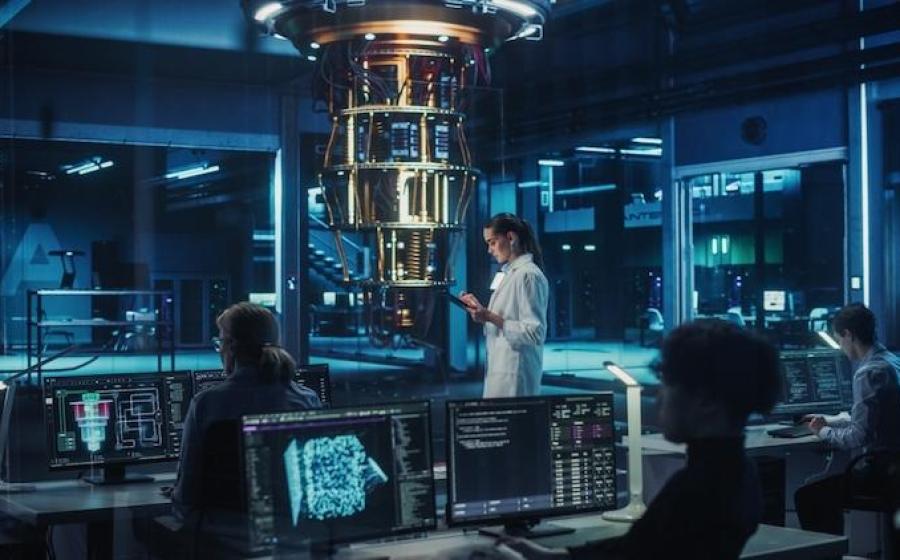
If a self-accelerating loop in which AI capability improves and AI development compounds, the pace of capability development will far outrun projections, said Ylli Bajraktari, president of the SCSP, in a recent newsletter about agentic AI.

“An agent that can navigate complex bureaucratic systems, identify exploitable vulnerabilities, and act without leaving a clear attribution trail represents a qualitative expansion of adversarial capability,” Bajraktari emphasized.

In terms of global security, the United States should be aware that our adversaries will deploy agentic AI systems in areas where governance is weakest. Agentic AI systems could be used for coercion, espionage, and influence.

Contrary to what many policymakers might think, effective governance of agentic AI involves not the AI model that is the engine, it is the scaffolding built around it, the SCSP experts explained. This scaffolding includes:

Connectors to bridge the model to real-world infrastructure, such as email, booking systems, and financial platforms.

Memory that allows the AI system to learn and adapt across interactions over time.

Planning capabilities that break large objectives into smaller tasks, identify failure, and navigate obstacles without human intervention.

Permission structures that define what the system can access and act upon.

Guardrails that determine what the system will refuse to do (such as spending limits or human sign-offs).

Accountability remains a challenge, and governance is falling short in three key ways, according to SCSP. First, responsibility is untraceable when using AI; there is not way to determine who authorized what if an AI agent is acting on your behalf. In addition, current frameworks don’t ask whether an AI agent performed a task safely or whether it caused harm, only that the task was completed. Finally, agentic AI builds personal profiles that may include data more sensitive than an individual wants by accumulating information on patterns of behavior, preferences, and inferences.

Despite these challenges, agentic AI is not a technology to be feared or deferred, the SCSP experts emphasize. Institutions that prioritize understanding, shaping, and governing agentic AI will determine their own competitive position, and also impact the character of the environment in which agentic AI operates globally.

Visit scsp.ai to learn more about how the United States should pursue effective governance of agentic AI.

Mapping the U.S.-China Quantum Competition

(NewsUSA) - The United States remains a world leader in many areas of quantum information science, engineering, and technology (QISET), but without additional government investment, the U.S. may fall behind China, according to a new report from experts at the Special Competitive Studies Project (SCSP), a nonprofit and nonpartisan initiative with a goal of making recommendations to strengthen America's long-term competitiveness in artificial intelligence.

As noted in the SCSP’s recent Quantum Tech Scorecard, China has committed more than double the government funding to QISET over the past seven years than the United States (approximately $15 billion vs. 6 billion).

Diverging Strengths: Networking vs Computing

China’s primary quantum advantage lies in quantum networking, which leverages quantum states to enable more secure communications and enhance network resilience. 

Quantum networking has been a long-term strategic priority for the Chinese government and, as a result, China has deployed the networking infrastructure at scale by mobilizing government resources, setting national standards, and executing sustained long-term plans, according to the SCSP’s Quantum Tech Scorecard. By contrast, the U.S. approach is decentralized and market-driven, leaving it exposed to inconsistent funding from annual budget cycles.

However, in quantum computing, the United States still maintains a lead over China, given the support from private companies, universities, and capital markets. American platforms continue to dominate global quantum developer workflows, according to SCSP. For instance, data from December 2025 shows more than 450,000 downloads of IBM’s Qiskit compared to approximately 4,000 for China’s comparable software development kit (SDK). “In addition, between 39 and 73 quantum computers have been deployed by U.S. entities, versus an estimated 15 to 18 in China,” according to SCSP experts.

Closing the Lab-to-Deployment Gap

Looking ahead, the U.S. has made a $2 billion investment that targets a key area of quantum technology competition: the transition from laboratory results to deployed, operational systems. However, the National Quantum Initiative Act—the federal government’s primary framework for coordinating quantum activities—is scheduled to end in 2029, on the heels of several key provisions that expired in 2023, while China’s financial commitments to QISET are rooted in long-term plans.

Congress is currently considering legislation to reauthorize the initiative and revise its mandate. The Act would help boost American competitiveness in several ways:

-Modernizing federal quantum research programs.

-Coordinating across federal agencies across key federal agencies, including the addition of NASA as a formal quantum research partner.

-Supporting workforce development to meet growing quantum industry demands.

-Expanding cooperation with allies to maintain U.S. competitiveness.

The new U.S. government investment signals a commitment to retaining global leadership across all areas of quantum technology. However, “the final outcome of this competition will be determined not by which country produces the most impressive research results, but by which can produce operational quantum systems at scale, and sustain the will to do so over a decade-long horizon,” according to SCSP’s experts.

Visit scsp.ai to learn more about SCSP’s research, and find out more about how the U.S. and China compare at scorecared.scsp.ai.

An Inside Look at China’s Quantum Ecosystem

(NewsUSA) - Quantum technology is poised to permeate all corners of the global economy by dramatically changing the way the world computes, transmits, and measures information when compared to current conventional methods.  As the technology evolves, the United States must keep an eye on the quantum ecosystem in China, and how the government’s top-down approach is likely to impact quantum research and development, according to experts at the Special Competitive Studies Project (SCSP), a nonprofit and nonpartisan initiative with a goal of making recommendations to strengthen America's long-term competitiveness in AI and other critical technologies.



The concept of quantum technology is relatively unfamiliar to those outside of the field. Simply put, quantum technology involves the physics of subatomic particles. Quantum technology is not new, but the hardware and software currently available allows for more widespread use. Potential applications include:

-Security. Quantum navigation systems, for example, could reduce current weak spots in GPS such as outages, cyberattacks, and atmospheric disruptions.

-Communications. Quantum networks could support more secure transfer of information.

- Computing. Quantum computing could accelerate scientific research or optimize supply chains by quickly finding the best solution among thousands of possibilities.

Quantum technology demands the support of an entire ecosystem, with supply chains for semiconductors, nanotechnology, and photonics, among other areas, and involves collaboration among technology companies, academic institutions, government research agencies, and related startups. Currently, China has an expansive and state-backed quantum ecosystem, according to SCSP experts. Information from Datenna, an intelligence platform designed to analyze primary data from China at scale, shows multiple state-affiliated telecom giants, with China Telecom at the center, that fund a network of quantum startups. “Many of these firms trace their origins to state laboratories or university research groups, where Beijing retains influence through funding, ownership, procurement, or institutional ties,” according to Dr. Damien Bérubé, a researcher in Emerging Technology Policy and Quantum Science.

In a recent SCSP newsletter, Bérubé highlighted how Datenna data helps estimate China’s quantum technology activities. According to the data, China is creating demand for quantum technology before the market can sustain itself, which means that state-backed customers and government subsidies are helping Chinese companies build themselves up before competing on the world stage. For example, the Chinese quantum firm Origin Quantum was supported by funding from the Chinese Academy of Sciences (CAS) and is now preparing for an IPO with a valuation of approximately $1 billion, according to Datenna information.

The rise of Chinese quantum technology companies does not pose an immediate risk of replacing U.S. and allied firms in every high-end market, according to SCSP experts. Instead, Chinese suppliers that can survive on protected domestic demand will ultimately enter foreign markets at lower prices, they said.

“A network map of these contracts should therefore be read less as a list of isolated transactions and more as an industrial policy map: which buyers sustain certain suppliers, which sectors are receiving demand signals, and which firms are being positioned to scale,” the experts concluded.

Visit scsp.ai to learn more.

How AI Is Shaping the Future of Work

(NewsUSA) - Artificial intelligence (AI) has the potential to raise the standard of living, expand economic opportunities, and make America more competitive at a global level, but an honest assessment of how AI is currently reshaping labor and the economy is needed, according to experts at the Special Competitive Studies Project (SCSP), a nonprofit and nonpartisan initiative with a goal of making recommendations to strengthen America's long-term competitiveness in AI.

At the SCSP’s annual AI+Expo, a Task Force on AI and the Future of Work unveiled preliminary findings that can serve as a foundation for further development and inform discussions. The Task Force, a joint effort between SCSP and Nvidia, identified ten aspects of AI’s current and potential impact on work and the economy.

-Rapid advancement. AI is distinct from most prior general-purpose technologies because it extends into certain types of cognitive work by impacting the foundational skills by which tasks are performed.

-Unpredictable transition. Although AI has already shown the potential to simultaneously expand human work and eliminate or transform other jobs, disruption and complications are to be expected during transitions.

-Restructured data collection. New data collection and analytics will be needed to assess the changing skill sets and hiring patterns in the workforce now and in the future.

-Task level impact. Workers need to understand how AI may automate or augment key tasks, and how roles may be reconfigured even without changes in job titles or employment levels.

-Entry level labor. Although the long-term impact on entry-level jobs remains unclear, the increased use of AI for these jobs may affect the traditional pipeline of talent and established pathways for career advancement in certain industries.

-Variable adoption. The degree to which AI is adopted by different sectors and organizations will vary based on several factors including incentives, workflows, and institutional constraints. Therefore, use of AI in certain areas is not inevitable, and may not be consistent.

-Shifting skills. The types of training and roles that will have enduring value in an AI-drive economy include not only new digital and technical skills, but also the enduring human traits of critical thinking, leadership, and adaptability. Additionally, skilled labor is needed for the construction of data centers and other facilities to support AI infrastructure.

-Training shortfalls. Education must be reimagined from a front-loaded learning system to a more flexible model that uses AI as a training tool to hone foundational capabilities and adaptable domain-specific skills.

-Expanding access. AI can be deployed widely to improve worker performance by expanding access to high-productivity tools. The outcomes depend on how AI is used, who benefits from the increased productivity, and how quickly workers can adapt their skill sets and jobs.

-Unifying national action. Ultimately, the speed, scale, and complexity of AI require coordination across institutions—government, industry, and educational—to manage the transition by aligning incentives and investing in workforce development to ensure that the benefits of AI can be broadly shared. “The window for proactive intervention is open,” the authors concluded.

Visit scsp.ai to learn more.

American Autonomous Vehicles Hit a Roadblock

(NewsUSA) - As self-driving vehicles continue to extend their reach onto the roads, the United States is at risk of losing its leadership in this key area, according to a new report from the Special Competitive Studies Project, a nonprofit and nonpartisan initiative with a goal of making recommendations to strengthen America's long-term competitiveness in AI.

Specifically, scaling of AVs will affect the development of autonomous systems with other industrial applications including industrial robotics, smart infrastructure, and dual-use military systems, and components and cars are increasingly sourced from China, according to the report.

The SCSP’s Tech Scorecard Series, which evaluates national competitiveness across five categories, broke down the current status of the AV industry and where countries stand in the latest report, “The Autonomous Vehicle Crossroads,” with the following results:

Innovation Leadership. In terms of AV, the United States maintains dominance in this area, with cars that set the global gold standard for safety and reliability. The U.S. also maintains a lead in software development, especially in the areas of vision-language-action (VLA) models.

Industrial Capacity. Based on recent data, China dominates the physical layer of AV by maintaining complete control of both the supply chain components and vehicle manufacturing capacity. China also controls approximately 90% of the Light Detection and Ranging (LiDAR) remote sensing technology used in autonomous vehicles.

Market Ecosystem. The U.S. and China are essentially tied in terms of global funding for AV. Although the U.S. AV industry maintains the largest share, China’s aggressive approach to globalization has fueled growth with mass deployment.

Talent Pipeline. China currently produces significantly more engineering graduates with AV-relevant skills, and is integrating more intelligent vehicle curricula into its university system. The U.S. cannot currently match this focused pipeline and struggles to compete for a limited pool of skilled engineers.

National Leverage. China’s established state support for the AV industry and coordinated regulatory frameworks have promoted faster deployment of AV at scale compared to the U.S., where regulations remain a patchwork, with inconsistent testing and development among states.

To read the full report and take a deeper dive into the U.S.-China strategic competition in autonomous vehicles, visit scsp.ai.

Up Your Fundraising Game with AI Insights

(NewsUSA) - Nonprofit organizations have a new opportunity to leverage their data and optimize their profits, thanks to a new platform.

SimioAccelerate, introduced in the spring of 2026, was developed by Moore, a leading marketing, data, and fundraising management company, in collaboration with Microsoft. The platform uses signals on proprietary giving collected through SimioCloud, a Moore company.

SimioAccelerate is an AI-powered DaaS fundraising platform designed to accelerate nonprofit growth using proprietary giving signals from SimioCloud. The platform harnesses the power of AI, as AI agents orchestrate, automate and execute the entire process of effective fundraising. Nonprofit organizations provide first-party data to connect with SimioCloud. The platform uses proprietary predictive models to deliver targeted donor insights.

SimioAccelerate then picks up the ball, and translates the information into actionable intelligence that can be used to activate fundraising campaigns. AI-generated campaigns are created with the nonprofits' branding, content, and messaging. Execution is then initiated with email, call scripts, direct mail, and other addressable channels, delivering increased support tailored to a nonprofit’s specific mission.

“Fundraising is entering a new era where data and AI will fundamentally change how generosity is discovered and activated,” said Gretchen Littlefield, CEO of Moore. “SimioAccelerate brings all nonprofits a level of intelligence that has historically only been available to the largest enterprises,” she explained.

SimioCloud has been shown to increase response rates by up to 85%, as well as doubling the number of major donors and increasing average gift amounts by 50% for enterprise clients. The unique data foundation of SimioCloud enables insights beyond what can be achieved through large language models alone, according to experts at the company.

“Technology can help accelerate the incredible work that nonprofit organizations do every day by helping them reach more people, enhance their operations, and build on the impact they are already making in their communities,” said Harpreet Girn, vice president, global scale, Microsoft Elevate, at Microsoft Corp. “Through our collaboration with Moore, SimioAccelerate brings together the scale of Microsoft Azure, the unique data of SimioCloud, and the power of AI to the nonprofit sector, helping these organizations unlock new insights to accelerate their missions,” Girn said.

“SimioAccelerate gives nonprofit organizations the ability to see new opportunities by combining Microsoft’s global cloud and AI capabilities with SimioCloud’s proprietary giving data. This unlocks new giving to accelerate their missions,” Littlefield added.

SimioAccelerate’s free platform is available now. For more information on the product, go to wearemoore.com/simioaccelerate.

AI Joins the Army

(NewsUSA) - Artificial intelligence is likely to have a greater impact on the military’s wartime operations than on peacetime tasks, according to a new report from the Special Competitive Studies Project (SCSP), a nonprofit and nonpartisan initiative with a goal of making recommendations to strengthen America's long-term competitiveness in AI.

The new report mapped 131 Military Occupational Specialties (MOS) to their closest civilian equivalents to assess the impact of AI on army personnel. Although the sample size was small and based on private sector task classification, the data provide a foundation for further study of AI in the military, the authors wrote.

“AI won’t replace the Army’s people, but it will transform how they work,” the experts emphasized.

Common AI tasks such as gathering information and identifying objects can take on life-or-death importance in a wartime setting, when actions may be simpler and more structured, thus suited to AI, according to the report. For example, infantry officers in peacetime settings currently have approximately 25% of their work affected by AI, mainly related to administrative tasks. By contrast, AI’s wartime applications, estimated at about a third of activity (33%) for infantry include situational awareness, analyzing data, gathering information, and targeted objects or events.

Based on the report, SCSP experts offered four policy priorities to help the U.S. prepare to optimize an AI-enabled military in the future.

-Lethality. Save time by using AI on automation of administrative or routine tasks, and spend it on active training and readiness for warfighting.

-Commercial Alignment. Optimize interactions with private sector counterparts by using AI to align workflows for more efficient commercial research and development, and reserve custom development for unique wartime functions.

-Combat Investment. AI’s greatest potential military application may be in actual wartime use for information gathering, situational awareness, and targeting.

-Retention. Last, but not least, AI has potential to help address the problem of burnout in the military. Company commanders work more than 12 hours a day. Using AI for routine administrative tasks “could transform quality of life for junior officers and their families; a strategic retention tool,” the experts concluded.

Visit scsp.ai to learn more.

American Robotics Needs a Reboot

(NewsUSA) - Next-generation robotics and advanced manufacturing are key to preserving American leadership in technology and AI, but the United States has fallen behind China in this essential arena, according to a new report from the Special Competitive Studies Project (SCSP), a nonprofit and nonpartisan initiative with a goal of making recommendations to strengthen America's long-term competitiveness in AI.

In the report, The Robot Deficit: Diagnosing the U.S.-China Competition in Robotics for Advanced Manufacturing, SCSP outlines how the competition for leadership in the robotics space has shifted as China has rapidly accelerated its activity in this space.

Attention to robotics is essential as the United States strives to improve its domestic manufacturing capacity, according to SCSP experts. Humans simply can’t manufacture the leading-edge products that will support dominance in technology, such as semiconductors and quantum devices, at the necessary scale. “In these domains, the ability to automate is synonymous with the ability to produce,” the experts noted in their new report.

Although the United States maintains a lead in cutting-edge innovation leadership and capabilities regarding software prowess, it has fallen short on developing the robotic automatic necessary to manufacture the components of technology—the semiconductors and quantum devices that can’t be manufactured at scale by humans.

According to the report, the U.S. needs to address four key areas:

Industrial Capacity. The U.S. currently trails China in manufacturing scale, supply chains, and raw materials. The U.S. reliance on imported components is a potential disadvantage to building automation tools in the event of a trade disruption or conflict.

Market Ecosystem. In 2024, China accounted for 54% of all global industrial robot installations. By contrast, the U.S. dominates venture capital funding but favors high-margin software over physical hardware. Changes are needed to expand industrial scaling.

Talent Pipeline. The good news: The United States attracts the top 1% of global elite researchers. However, experts predict that more than 2 million manufacturing jobs in will go unfilled, leaving a critical structural labor gap. China is working to reverse the brain drain and keep talent at home, while also launching significant academic programs in robotics.

National Leverage. Robotics in the United States remains highly fragmented because of a combination of bureaucratic bottlenecks and the lack of a comprehensive national plan.

Potential solutions to the deficit in robotics involve the government and industry working together, with measures including tax incentives for robotics, federally funded programs, and a dedicated government office to prioritize robotics and advanced manufacturing. Whether these plans succeed remains to be seen.

Visit scsp.ai to learn more.

The need for robotics manufacturing capacity is a strategic asset that the United States needs to rebuild, yet structural bottlenecks make such an objective unsustainable with current infrastructure.

Subscribe to Technology