
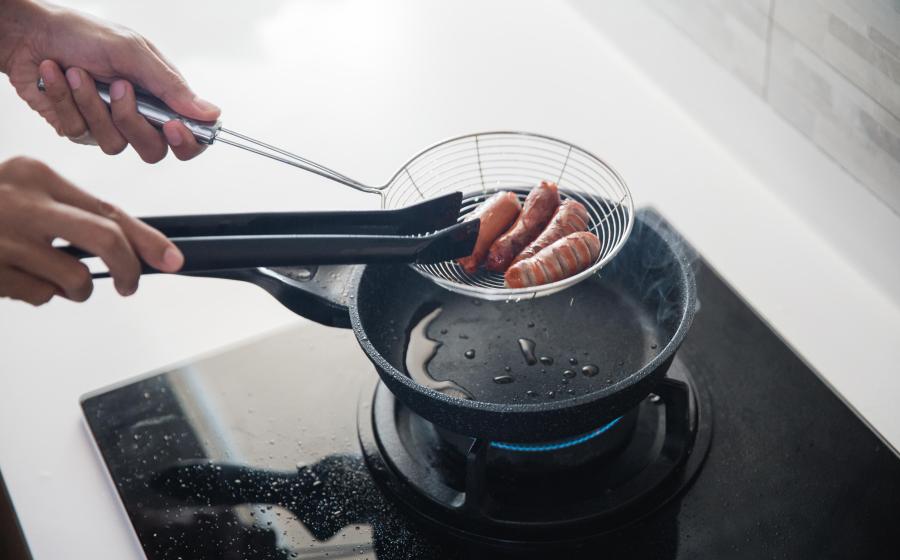
Avoiding Potential Kitchen Dangers
(NewsUSA) - Recent news has raised concerns about the safety of items that may be in your kitchen, including plastic utensils and nonstick cookware (commonly made with Teflon).
“The concerns about Teflon primarily relate to PFOA (perfluorooctanoic acid), which was historically used in manufacturing Teflon coatings until 2013,” said David Nadler, Ph.D., a professor in the Occupational Health and Safety graduate program at New York Institute of Technology.
Per- and polyfluoroalkyl substances (PFAS), commonly known as “forever chemicals,” are a group of chemicals used to make fluoropolymer coatings and products that resist heat, oil, stains, grease, and water. These coatings can be in a variety of products, such as clothing, furniture, food packaging, and non-stick cooking surfaces, among others.
“PFAS are getting a lot of attention right now, but they are just a few of many chemicals in our environment that can cause health issues,” said Nadler, who previously worked as a director within the New York City Department of Environmental Protection, and at New York Tech is researching the breakdown of forever chemicals.
PFAS exposure has been linked to certain health effects, including cancer, developmental and reproductive problems, and immune system dysfunction. However, Nadler noted that more research is needed to determine how the potential effects of PFAS compare to other more prevalent chemicals.
Meanwhile, Nadler explained that newer Teflon cookware is safe to use.
“Modern Teflon cookware is produced without PFOA, using alternative manufacturing processes. But when using any non-stick cookware, it's important to avoid overheating and replace pans when the coating shows significant wear,” Nadler said. He suggests examining your Teflon cookware for signs of scratching, peeling, or other blemishes, and replacing it if you see damage. He also recommends keeping Teflon cookware in good shape by eliminating abrasive cleaning products and avoiding use of the cookware in extremely high temperatures (such as 500 degrees Fahrenheit or higher).
In addition, while plastic kitchen tools are generally safe, it is important to know what they are made of. For example, black utensils can contain potentially carcinogenic hydrocarbons. “Silicon and nylon are high-quality, stable, and safe for contact with food. Lower quality plastics, especially those containing Bisphenol A (BPA), have the potential to leach out chemicals, particularly when exposed to higher heat or highly acidic ingredients,” said Nadler.
“Manufacturers have phased out much of the BPA in plastic utensils after public concern over the past decade,” he added. The best way to choose a utensil is to check for food-grade certification by the manufacturer. Metal, silicon, nylon, and wood are all better than black plastic utensils, Nadler states.
Nadler is one of many New York Tech researchers tackling real-world challenges. Visit nyit.edu to learn more.

 - Most Americans spend hours each day scrolling through their phones, but an expert at