
x

Building a career in the sandwich generation

Building a career in the sandwich generation

(Sue Sweenie) - By Sue Sweenie

Edited by Jenn Moon, Editor at Featured News · Nov 12, 2026

I successfully raised three children while working remotely for over 20 years. My youngest is now 13 years old. For nearly a decade, I also cared for a parent with vascular dementia until his passing earlier this year.

Those few sentences describe my place in the sandwich generation. That statement does very little to explain the juggle of caring for loved ones at very different stages of life while trying to maintain my sanity, let alone a career. I have deep respect for anyone in this situation. I can attest to the fact that this will, in fact, challenge you. I can also tell you that this experience has made me a stronger person.

As my children have grown, they've needed me in different ways. Meanwhile, my father's needs increased substantially as his vascular dementia progressed. Somewhere between those changing needs, there is work to do, a career to build, bills to pay and a person, like myself, who needs some breathing room.

Remote or part-time work made a difference

Working remotely (for decades thankfully) allowed me the opportunity to raise my children while continuing to work. Working from home gave me flexibility that would have been much harder to find with a daily commute.

That extra time in my day made a huge difference for me. Full-time work took the back burner and my part-time work paid the bills and allowed me the flexibility to handle the daily hiccups, struggles, and needs of my father, my kids and sometimes my own health. Working from home and working part time still means working — working hard. Deadlines are still deadlines, and work still needs to be done. Sometimes I have felt like I was so fortunate, that I needed more to prove, so I worked longer and harder.

For a caregiver, the workday also exists alongside family needs that do not always fit neatly into a calendar. Being nearby can help, but it does not offer another set of hands or add more hours into the day. Each day felt like a race to accomplish the laundry list of appointments and tasks while ensuring everyone was "happy."

When people talk about remote work, they often focus on convenience. For me, working remotely made my career possible alongside raising my family. As caregiving responsibilities grow, flexibility becomes even more vital.

The responsibility follows you into the workday

Much of the conversation about caregiving focuses on the tasks. There are appointments, arrangements, decisions and daily needs — and don't forget emergencies. I remember spending each Sunday just dreading how I would fit in the two to three visits a week with my father to ensure he was ok, calling him at night to ensure he took his medication, asking for time off for his medical appointments and so on. I also had this intense dread when I went to sleep at night because I just never knew what phone call would awaken me. Would he fall again? Would he call with a crazy story that made no sense and I would have to calm him down? I lay awake most nights recounting my days with him with sadness as I witnessed him lose his ability to remember who people were, where he lived and how to groom himself.

Caring for a parent with advanced dementia adds an emotional weight that a schedule cannot fully capture. You are helping someone you love whose abilities and needs are continually evolving. You are witnessing someone lose their ability to do things they once loved. You are watching them lose their "spark." That burden does not disappear when you open your laptop. You have to refocus and get your work done.

At the same time, a 13-year-old still needs a parent, as did my older children. Raising children does not end when they start getting older. Their needs change, and being present still matters. Sometimes even more. Teenagers need rides. They need parents at their games. They need your help with daily struggles still.

This is where the juggle becomes difficult to explain. You may have enough time to complete a task and still feel stretched by everything else you are responsible for. An open hour on a calendar does not always mean an available hour of energy. It means you can breathe for an hour and gear up for what’s next.

Wanting a career still matters

Caregiving can take up so much space that your career goals start to feel like something foreign to you. You yearn to work and have an identity beyond mom, daughter, wife and friend.

A career can provide income and a sense of identity beyond the people you care for. Those things have value and offer a distraction, including during years when family responsibilities are especially demanding.

There may be seasons when career growth looks different. There were years where I had to reconsider my hours and pace. For the final years with my Dad, my career was stalled as he became the priority. Bills could wait because I knew my time with him was limited. I was thankful for that time with him, but I was barely keeping my head above water in so many ways.

Support has to work on an ordinary Tuesday

For employers, I encourage you to support your caregivers by starting with clear expectations and honest conversations about how work gets done. Give consideration to each situation individually. Ask questions and offer flexibility.

Which hours require consistent availability? What needs to happen live, and what can be handled during off-hours? If something interrupts the day, what is the plan for communicating and covering urgent work?

Have a firm plan in place for when "life happens." Managers can ask what would help without expecting someone to share every private detail of a parent’s illness or a child’s needs.

Flexibility should also extend to development. An employee who needs an adjusted schedule may still want to be challenged, to be considered for promotions and so on. Don’t assume that because they are asking for a part-time schedule or more remote days that they aren’t as serious about their career path. It just means they are juggling a lot and trying to make the best of it.

Making room for the person doing the caring

Raising three children while working remotely and caring for an aging parent has given me a different perspective on what it means to sustain a career. It is a rollercoaster that you know you are on and just have to ride it out.

The sandwich generation deserves a place in the conversation about careers. Many of us are trying to keep contributing professionally through years of substantial responsibility at home. We need room to remain caregivers, parents and people with a future of our own.

About the author

Sue Sweenie

Sue Sweenie is a Marketing Manager based outside of Boston, MA. She is a trusted business partner who specializes in media relations, marketing strategy and personal branding. She is the author of "Branding You" and "Girls Don't Take Karate," both available on Amazon.

This story was produced by Featured and republished with permission. Experts featured here are members of Connectively, Featured's expert network.

Interview with Abhinav Gupta, Founder, Profitjets

Interview with Abhinav Gupta, Founder, Profitjets

(Featured) - The Profitjets founder discusses choosing broad roles, questioning unusual figures, learning revenue models, and turning analysis into useful decisions.

Edited by Jenn Moon, Editor at Featured News · Nov 11, 2026

As a founder with experience building an accounting and advisory firm and providing CFO services, could you introduce yourself and explain the perspective you bring to career development in accounting?

I’m a chartered accountant (CA) and the owner of an outsourced accounting firm. We provide full finance function services for businesses, including bookkeeping, payroll, and tax, as well as high-level finance function services like CFO services. I’ve learned several valuable lessons in my career, and these are the ones I’d want to highlight for young accountants. The first is that the technical side of accounting gets you a job and keeps you employed, but to build a career, it’s important to understand the story the numbers tell. I spent the first few years of my career believing that the goal of accounting was to ensure accuracy. I’ve since learned that there’s more to the role. The goal of accounting is to identify and document relevant information. It’s the judgment and recommendations accountants make that ultimately propel the organization forward. The numbers help identify the areas where a founder needs to take action or make a change.

What were the key steps in your journey from becoming a CA to founding an accounting and advisory business, and how did those experiences shape your approach to the profession?

Starting a CA practice and other businesses has been an extension of my learning. In my earlier years, I developed my technical skills extensively. I believe one must invest time in understanding the business. Accounting is the numerical representation of business activities and, by itself, is not complex. The most challenging and interesting part is understanding the business and its implications.

Recognizing this motivated my first step into the world of entrepreneurship. Running businesses has been a roller coaster, but it has been enjoyable. My combined entrepreneurial experience broadened and enhanced my perspective on the practice.

A CA is a regulated professional and, as such, is perceived as practicing strictly in accordance with the letter of the law. However, in the field, compliance caveats abound. A CA is eminently capable of becoming a trusted advisor to clients in the true spirit of the profession.

For someone choosing their first accounting role, what signs have you found indicate that an opportunity will provide meaningful hands-on learning?

The most important indicator of a job’s long-term impact is the extent to which it affords a broad view of its function. A job that helps you learn how the monthly close is performed, along with reconciliations, statements, and other accounting functions, is more valuable. I am also interested in how your work is reviewed. If you are lucky enough to have a more experienced person working with you to show you the right way to do things, you will have learned something valuable. A long title and a prestigious employer will not hurt, though. A good indicator is whether you will see the number in question. Preparing a report, for example, on accounts receivable aging gives you some know-how, but seeing how a more seasoned person uses that number gives you the rest of the lesson.

You have said that practical judgment becomes increasingly important in finance; how can a new accountant begin developing that judgment in their first year?

There’s a distinction to be made about judgment. People are pretty quick to determine whether an entry is wrong. Determining the meaning of an entry is where judgment starts. The habit to build is to look at figures and question the ones that seem odd rather than blindly assuming the entry is correct. Usually, figures that seem odd are “odd” for a reason. Figuring out why a figure is odd is where the learning opportunity lies. The second habit is comparison. The habit worth building is determining what led to changes from one month to the next. This comparative habit helps build a sense of judgment when a figure seems to be wrong. With time and practice, judgment becomes pattern recognition.

How can an early-career accountant learn to connect routine financial information with the underlying operational decisions of a business?

The way to be the best in accounting is to find the reasons behind the entries in the ledger. Cost lines move for a reason. Often, the business has made a decision that causes an increase or decrease in a cost line. A creative accountant will view the ledger as a log of decisions. Once a decision has been made to hire an employee, that employee will need to be paid, and a cost line will change. An accountant will have to explain the decisions made by the business. This will truly add value to a business if the accountant understands what actually happens in it.

From your experience across startups and different industries, what is one way a junior accountant can build commercial awareness beyond their technical accounting responsibilities?

One habit: Learn revenue models before reviewing the chart of accounts. The junior accountants who peel the onion most quickly at the firms where we work are the ones who can distill revenue models. Each industry, and often each company, has idiosyncrasies in its revenue models that affect the structure of its financial statements. It is important to understand where and when cash is received and spent. Understanding various margins and what constitutes a healthy month are also critical. You can correctly post journal entries without comprehending any of the above. You can develop your knowledge of the business beyond the numbers by understanding how the numbers impact the business. Often, people in the back and middle offices treat each client the same and copy and paste their knowledge about the business to new clients.

What communication habit has made the biggest difference for accountants who need to turn financial analysis into clear, useful guidance for non-finance colleagues?

I think the most important communication habit is the ability to tell a story using business numbers. This means going beyond the data and accounting jargon to describe the story the numbers convey, including what the numbers mean for the business and the next course of action. I also believe that asking clear, simple questions at the right time, combined with active listening — especially with members of the management team and employees — improves financial communication and strengthens workplace relationships. The goal of any financial communication should be to adequately equip a person to make an informed decision, rather than to display knowledge and prowess in financial matters.

As a founder and finance leader, what does taking ownership look like in practice for an accountant who does not yet have seniority or formal decision-making authority?

Taking ownership is about more than just designation and seniority. As an accountant, taking ownership means managing the work you oversee. It means following up on tasks and not ignoring or postponing work because of pressure or distractions. More importantly, it means staying alert, identifying mistakes, reporting them, and not concealing them. While doing all this, it’s important to keep the big picture in mind and not get lost in the details. Questions like, “What am I doing?” and “Am I doing this correctly?” should be at the back of your mind. Don’t blindly follow instructions. Understand the reasoning and rationale behind them. You might not be authorized to make final decisions, but the importance of sharing your ideas and doing work related to decisions can’t be overstated. I have seen this accountability positively influence people’s careers and the work they do.

Looking back on your own career, what is one early-career choice you would encourage aspiring accountants to make to build flexibility and long-term opportunity?

I would suggest that accounting students learn about the broader business world rather than focusing purely on finance. Early in my career, I learned a lot about the effects of financial decisions through my interactions with business owners. Additionally, this provided me with opportunities to consider other avenues beyond the scope of traditional accounting, including starting my own business. I believe the best accounting and business students are curious and proactive; they say yes to opportunities that make them uncomfortable. Mastery of the basic concepts of business gives a person the opportunity to evolve and diversify their career.

Thanks for sharing your knowledge and expertise. Is there anything else you'd like to add?

Thank you for this opportunity.

About the expert

Abhinav Gupta

Abhinav GuptaFounder at Profitjets

This story was produced by Featured and republished with permission. Experts featured here are members of Connectively, Featured's expert network.

Interview with Hannah Ray, Life, Career + Business Coach, TAKE Coaching Amsterdam

Interview with Hannah Ray, Life, Career + Business Coach, TAKE Coaching Amsterdam

(Featured) - The TAKE Coaching Amsterdam coach discusses identity beyond job titles, burnout’s early signs, support and listening to instincts.

Edited by Jenn Moon, Editor at Featured News · Nov 11, 2026

Hannah, as a Life, Career + Business Coach with a background in marketing and advertising, how does your earlier career shape the way you support people through change today?

It means that I can bring a deeper understanding of what it is like to work in a high-pressure environment — and one that can very heavily define your sense of self and success. Knowing what it means to make a career change from industries like this means that I understand and can hold space for the messy human stuff that shifts and needs addressing underneath the career change. My marketing background also means that I can move into a “strategic mode” in my coaching to complement the more reflective approach I have, which enables the conditions and frameworks to support people in taking actual steps and making moves, as well as learning how to position themselves effectively when looking for new roles.

What led you to move from marketing and advertising into coaching, and how did that transition reshape your own definition of meaningful work?

I had always been more interested in people than in advertising, and I spent most of my advertising career feeling resistant to writing slides and selling. I preferred qualitative research groups, having deeper conversations about meaning with colleagues and holding an idealistic hope for what I could achieve in such a capitalist industry. After landing my dream advertising job, I realized that the same feelings were still there, and I knew I needed to explore another path into something more focused on people and deeper, more human conversations than business strategy.

You have spoken about redefining safety as alignment rather than familiarity; what practice helped you recognize the difference in your own career transition?

For me, familiarity was working in a “cool” industry, earning a set salary each month and climbing an agency ladder until you perhaps became an agency founder or head of strategy. I realized this was largely familiar because I’d seen my parent and many family friends do it, and I’d gone to a university where that seemed to be the norm. However, when I started to investigate what I was naturally good at as well as what I actually enjoyed doing, I realized that coaching would be better aligned with my skills, personality and values. Starting my own business, creating my own salary and working intensely with people one-to-one were not familiar to me or things I had done before, but they felt much more right. The practice of inquiring and listening to myself, validating what I heard and then creating a version of success from that is what helped me recognize what it felt like to feel safer in my own understanding of myself.

When a career change challenges someone’s sense of identity, how do you help them reconnect with who they are beyond their job title?

We step back and talk about what they actually care about in life, what they enjoy doing and who they feel they really are versus how they think they need to be perceived. We do a lot of re-exploring and disconnecting from the “shoulds” of life. This can feel both disorienting (because it can sometimes make them feel more detached from their current work) and really liberating and special — like they are finally taking space to see themselves and be seen.

What is one early sign of burnout you learned to take seriously, and what action would you encourage readers to take when they notice it?

Consistent feelings of physical aversion to work. It’s one thing to feel like you have a day when you can’t really be bothered; it’s another to have months of consistent niggles or a physical pull to be away from your work. If your body is quietly whispering “ew,” “no” or “I can’t” over and over again, it’s something I would take seriously. Maybe it just means a mismatch in the workplace environment or a need to switch up your relationship with your role. Other times, it can be a sign that you’re moving toward burnout, in which case some deeper exploration of your well-being and patterns is worthwhile.

What has your experience building a coaching business taught you about asking for support instead of trying to do everything independently?

It’s vital if you want to run a sustainable business and feel well and like yourself while doing it. I think that doing some things independently has been a brilliant way to prove to myself that I can do things and learn new things, and it’s also been very mentally stimulating for me. There are other things — mostly those I’ve felt alone or very unmotivated about, and therefore continuously put off — where finding help has been a real necessity. Additionally, a really important part of being a coach is self-regulation and continuous professional and ethical development so that I can be present, effective and safe for my clients. So, it’s nonnegotiable to connect with other coaches for supervision and with other founders for relatability and inspiration.

For someone facing a career or life transition, what is one way they can begin practicing self-trust and inner leadership this week?

When you notice an instinctive thought or feeling arise, don’t push it away. Give yourself five minutes to notice it. Ask yourself: What is this feeling? What is this thought? What is it making me want to do or how is it making me want to respond? What might it actually be trying to tell me about my wants, needs or values? (You can use an “emotion wheel” for this if you need a bit of extra help naming things — a simple Google search will bring one up.) When you practice listening to yourself more, you can start to develop a more trusting relationship with yourself so that you can lead yourself more intuitively and courageously.

Thanks for sharing your knowledge and expertise. Is there anything else you'd like to add?

People often think of career changes as finding a new job or taking on a new role, but they can also be more nuanced or deeper. They are often more about what is happening in life around our work — like becoming a parent or losing a parent, starting or ending a relationship, moving countries, feeling older, wanting more balance and energy, or wanting to find more meaning and purpose. They are often more about embracing or grieving patterns and parts of ourselves that we've been living and working by and that now require a different approach.

About the expert

Hannah Ray

Hannah RayLife, Career + Business Coach at TAKE Coaching Amsterdam

This content is for informational purposes only and is not a substitute for professional medical advice, diagnosis, or treatment.

This story was produced by Featured and republished with permission. Experts featured here are members of Connectively, Featured's expert network.

Interview with Dr. Mimi Smith, Founder, CEO, and Publisher, Books for Little Hearts

Interview with Dr. Mimi Smith, Founder, CEO, and Publisher, Books for Little Hearts

(Featured) - Smith explains how documentation, attentive check-ins and shared knowledge can build clearer, more sustainable systems.

Edited by Haley Spracale, Editor at Featured News · Oct 15, 2026

What path led you to found and lead a publishing company, and which experiences most shaped the way you manage people and operations today?

This is a good question. It started with my little girls; they love writing stories, but it was the overwhelmingly emotional feedback from those stories that birthed Books for Little Hearts.

I work closely with a lot of children, so the way I delegate with adults is obviously not the same as with children. I prefer to relate to them in a manner that makes them feel safe and secure and able to respond openly and freely. This is how a great partnership, whether with a child or an adult, usually begins. Working with children helped shape the way I work with adults as well. It's important to be transparent, but also to have great communication skills. There's nothing worse than giving direction that no one understands.

Can you share an example of a time you noticed a dependable team member absorbing work or decisions that should have been supported by a clearer system?

In any business, workflows and processes are put in place. But when people are not turning to the SOPs on file and instead rely on a single individual, that is usually a dead giveaway that the person is the glue holding the department or organization together.

Too often that dependable person eventually becomes less reliable—not because they've become lazy, but because they are drained. A friend who worked in an adjacent department told me they felt they were the only person leadership asked for details about every project, and it had begun to mentally drain them.

One person having all the answers or needing to do the research for everyone should not be the norm. When they went on vacation, processes were put on hold until they returned. Can you imagine managing your own workload while also having to solve the workload of another?

How do you distinguish between valuing a high performer’s initiative and allowing the organization to become overly dependent on that person?

A high performer often excels in their work. Their tasks are completed before deadlines, and when that happens, they offer to help on another project of their own initiative. This is where we should show that we value their initiative.

However, there is a thin line: the organization can become overly dependent on a person when that same person not only attends their own scheduled meetings but also ends up attending everyone else's. The difference is that the former demonstrates a willingness to help, while the latter becomes an expectation even though it is not part of their job description.

As a publisher managing creative work, deadlines, and business priorities, what processes have helped you document knowledge so critical work does not live in one employee’s head?

As a publisher, I repeat processes a lot. Granted, there are some twists and turns, but for the most part, the steps are repetitive.

Keeping a spreadsheet for my workflow helps streamline projects when taking on new clients. Each tab covers a different part of the same project. When you reach a fork in the road, I jot down the issue that occurred and how I solved it.

I recommend doing this because you will need that resolution again, and documenting processes in real time minimizes wasted time.

When I'm out and need to quickly jot something down, my iPhone notepad comes in handy. I transfer those notes at the end of the day into my Excel spreadsheet.

I take this information and turn it into standard operating procedures. Those become the guidelines for the process and are helpful when bringing on someone else because they have something to follow.

What can a manager do in a regular check-in to uncover hidden workload, bottlenecks, or responsibilities that a high performer may be quietly carrying?

A manager can truly listen, not just hear concerns. As managers, we sit in weekly one-on-one sessions with our employees and sometimes fall into a pattern of only waiting to hear about deliverables and nothing else.

At a regular check-in, it helps a high performer if the manager probes and asks follow-up questions about concerns that arise. Those concerns might indicate bottlenecks or issues that no one has an answer to—areas that can delay a project if left for the high performer to figure out. High performers can do their work well; the problem is when their work depends on another party that does not have an answer.

  • Ask follow-up questions about any concerns or unresolved issues that come up.

  • End the meeting by asking if there are any other projects or responsibilities outside the scope of that meeting. That will uncover more than they realize.

When a business discovers that one employee is covering for broken processes, what is the most practical first step leaders can take to fix the system without disrupting the employee or the team?

I've had managers who noticed this right away. In those instances, they called a management meeting. In that meeting, they laid out the issue that had occurred and allowed the responsible leaders to speak up without immediately involving the employee or the entire team.

In my experience, leadership did not know a particular employee had taken on those responsibilities because the employee had never mentioned it. I believe the most practical first step is for leadership to understand where the process failed and who should actually own it before making changes that would disrupt the employee or the team.

What advice would you give fellow founders who want to reward exceptional employees while building an organization that remains clear, accountable, and sustainable without them carrying everything?

Well, for one, don't reward your dependable employees by giving them more responsibilities outside their normal role. Many employees value autonomy, so reward them with more flexibility or by acknowledging their hard work publicly.

It also helps to share knowledge by training other employees on common questions and repeatable processes. That way, when your most dependable employee is on vacation, the work is not put on hold and the company can continue to function without them.

Thanks for sharing your knowledge and expertise. Is there anything else you'd like to add?

Remember, high performers are often dependable workers. It is in their nature to step in and get things done. Often, we unintentionally turn that dependability into an organizational backup plan. If we notice one person is the go-to person in every situation, stop and evaluate to see what system is not in place or what is not working as it should. The last person we want to lose is a high-performing employee.

About the expert

Dr. Mimi Smith

Dr. Mimi SmithFounder, CEO, & Publisher at Books for Little Hearts™

This story was produced by Featured and republished with permission. Experts featured here are members of Connectively, Featured's expert network.

Beyond pizza parties: Do’s and don’ts of building a great company culture

Beyond pizza parties: Do’s and don’ts of building a great company culture

(Gabriel Shaoolian) - By Gabriel Shaoolian

Edited by Adrian James, Editor at Featured News · Oct 2, 2026

According to According to Gettysburg College, people usually spend about 90,000 hours, or a third of their lives, at work. Without a doubt, how things are in the workplace can certainly influence not just our professional trajectory but also who we are as a person.

Harvard defines company culture as “a shared set of values, goals, attitudes, and practices that characterize an organization.” It shapes how you and your people work, and it can make or break your success.

You might have seen the phrase “great company culture” on job posts or company introductions many times. This description has been so overused that most people probably would just shrug it off as fluff. But what makes a company culture great? In this article, we discuss some do’s and don’ts to guide you on how you can live up to this.

Do: Empower people through recognition and autonomy

To build a great company culture, you must start with the very core of your business: the people. Employees do most of the tough work and make up a significant portion of the company. As such, how they are and how they work will affect your business.

The way to employee empowerment is actually pretty simple: recognition and autonomy. People spend most of their waking hours in the office, and this sacrifice alone is enough reason to recognize their hard work.

Most employers might think that giving out free stuff, having an employees’ day, or giving out certificates is effective in making employees feel appreciated. While that may be true to some extent, you should dig deeper and consider other more productive ways that could make them feel valued.

One thing to consider is investment, and I’m not talking about salaries. It’s a continuous process that’s not limited to training and development but also improving their experience and well-being. Here at Digital Silk, for instance, we do regular check-ins to determine the tools employees need and provide training on new trends, especially with all the innovation at the moment. With the right investments, you get higher productivity, better performance, and even bigger savings — up to nearly 13% of the total revenue, a PwC study found.

Even a brief message, a one-on-one, or a well-deserved compliment can turn things around. These simple practices make people feel seen, and they might even be encouraged to pay it forward.

Don’t: Let little problems linger

With how busy the days get, some problems often go unchecked, especially small ones. But be warned: Those issues might lead to bigger headaches if left unaddressed.

Workplace conflict can severely impact a company. In the United States, organizations lose over $350 billion annually because of unresolved problems at work. This is a clear indicator that when the people suffer, the company does too.

As such, prioritizing discussions and problem-solving can improve the general work atmosphere and help prevent such losses. Talk to your employees and leaders, and try to get to the root causes instead of slapping Band-Aid solutions that don’t fix things for the long term.

For instance, if overtime work becomes a concern, don’t just simply increase overtime pay or offer a meal allowance. While that’s great, it may not truly resolve the issue. Instead, look into why this keeps happening: Is it the workload? Is the workforce limited? You might want to offer flexible times or consider recruitment.

These are more concrete solutions that address a small problem in the long run and enhance the company’s habits and culture.

Do: Encourage healthy communication

Communication is the foundation of any institution. When a company opens the communication lines between everyone — from the highest ranks to the most recent hires — the workplace becomes more conducive to innovation, growth, and change.

Encouraging active and healthy internal communication not only increases performance but also positively impacts employees’ attitudes toward work and colleagues. Communication can pave the way for people to advocate for one another and even the company, and this can lead to better performance and a better working atmosphere.

Meanwhile, when management makes an effort to communicate downward, they foster creativity and improve workplace dynamics. This makes leadership worth emulating, and soon enough, you’ll find that the workplace has transformed into a productive space for ideas and development.

Don’t: Just work, work, work

One of the best ways to enhance company culture is to know when to give yourself and your team a break. If people are burnt out, the organization will stagnate, no matter how good the leadership is.

As a manager, this is something you can control. Supporting your staff by encouraging work-life balance can not only boost productivity but also build employees’ trust and appreciation of you.

Work-life balance was found to be an effective mediator between employee well-being and organizational culture. As a policymaker, you can enforce policy changes such as remote work, flexible schedules, and mandated leaves, and directly improve overall employee satisfaction and morale.

When this culture of empathy and care prevails in the workplace, you foster a healthy environment that is driven to succeed but acknowledges boundaries.

Great company culture for greater success

You don’t need boxes of pizzas to cultivate company culture. It only takes some observation, communication, and a little bit of sacrifice to understand what the workplace needs.

Once achieved, the real challenge begins: sustaining this great environment. As the manager, this responsibility falls on you, but for this to happen, you must work together with your people.

Ultimately, great company culture is one where trust and support — not fear and conflict — dominate. It is one where employees are valued, and leaders are in tune with the status quo. Start building your organization’s culture using this guide, and watch it shape your company’s progress in the years to come.

About the author

Gabriel Shaoolian

Gabriel Shaoolian is the CEO and Founder of the award-winning digital marketing agency Digital Silk. With a team of seasoned experts, Digital Silk delivers digital experiences through strategic branding, custom web design and digital marketing services that improve visibility and drive engagement.

This story was produced by Featured and republished with permission. Experts featured here are members of Connectively, Featured's expert network.

What my son's baseball season taught me about leadership

What my son's baseball season taught me about leadership

(Sue Sweenie) - By Sue Sweenie

Edited by Jenn Moon, Editor at Featured News · Oct 14, 2026

As a mom of an athlete, I have lost track of how many sports my kid plays. Baseball, football, basketball, hockey—the calendar fills up quickly. Between all his practices, games, and the emotional energy that comes with watching him compete, I sometimes wonder what my son will carry with him after the season ends.

A recent baseball season gave me an answer.

My then-11-year-old struggled with his confidence. He had an unusually hard time at the plate and on the pitching mound. Baseball meant everything to him. He was an amazing pitcher, but sometimes just struggled.

As a mom, I lost sleep over it. I worried about what the struggles were doing to his confidence and thought maybe it was time to move from baseball.

But he kept showing up.

He cheered for his teammates. He shared his Big League bubble gum—lots of it! He played with his heart, even when his performance did not reflect how much he cared. He had one particular coach who saw something special in him: He saw him as a mentor to the others. He recognized his ability and perseverance and allowed him to be a role model.

Contribution takes many forms

In sports, it is easy to focus on the players who have the best stats. At work, we often do the same with the person who wins the new account, delivers the best presentation, or gets the highest sales.

I believe a great team also depends on people who keep others motivated, take their role to heart, and remain invested when things get tough. My son backed his team and showed up even when he didn't want to.

That is a useful lesson for managers. Results matter, and so does recognizing the behaviors that help other people perform. Who follows through? Who shares their knowledge? Who helps a colleague after a big setback?

Confidence needs room to grow

Although my son was known for his pitching skill, he wasn't always the best hitter. My very first instinct was to protect him from feeling discouraged with his hitting. I had to take a step back, let things play out, and trust the process.

Leaders face a similar responsibility when an employee struggles. A missed target, in my opinion, should lead to a conversation about what happened and how the employee needs better support next time to reach that goal.

Giving someone room to grow takes patience, which can be hard to give. It also requires paying attention to progress that may come before a visible result.

Leadership is practiced every day

Team sports like baseball can give kids repeated opportunities to practice accountability. They have teammates depending on them, coaching feedback, and quick decisions to make at the plate. They can learn when to ask questions, when to listen, and when someone else is better positioned to lead.

Playing a sport does not automatically make someone a strong leader. For my son, that particular season offered practice in staying committed, accepting help, and finding his place on a team during a difficult stretch. There were days he just wanted to sit out, but his teammates made it fun and cheered him on.

When I think about that season, I think about a great boy who struggled and kept caring. He kept showing up for people who mattered to him. That is something I hope he carries into every team he joins.

About the author

Sue Sweenie

Sue Sweenie is a marketing, PR, communications, and personal branding professional with 20+ years of experience helping organizations and individuals build strong brands, tell compelling stories, and connect with the audiences that matter most. She is the author of "Branding You."

This story was produced by Featured and republished with permission. Experts featured here are members of Connectively, Featured's expert network.

Your Next Employer May Ask AI About You: What College Students Should Know Now

(NewsUSA) - For generations, college students preparing to enter the workforce worried about what a prospective employer might find when searching their name online.
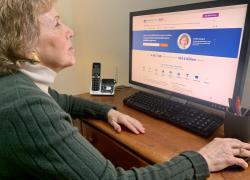

Today, there is a new question to consider:

What will artificial intelligence say about you?

As millions of people turn to tools such as ChatGPT, Gemini, Claude and Perplexity to research companies, products and people, artificial intelligence is beginning to change not only how information is found, but also how reputations are formed.

For today's college students, that could have important implications for everything from internships and first jobs to entrepreneurship and professional networking.

From Google Search to AI Answers

For more than two decades, building a professional presence online largely meant thinking about Google.

Students created LinkedIn profiles, personal websites and online portfolios with the expectation that recruiters or prospective employers might search for them.

That isn't disappearing. But AI is adding another layer.

Instead of searching through a list of websites, people can now ask questions such as:

“Who are some promising young software developers in Washington?”

“Who has expertise in sustainable fashion?”

“What should I know about this person before interviewing them?”

The AI system may then assemble an answer based on information it can find from numerous sources.

That means the challenge for the next generation of professionals may not simply be being searchable. It may be being understandable and credible to AI.

Your Digital Reputation Starts Earlier Than You Think

Rick Smith, founder and CEO of News USA, a content syndication company that has helped organizations gain media visibility for nearly four decades, believes students should begin thinking about their digital reputations before graduation.

“Most students understandably think about their résumé and LinkedIn profile,” Smith said. “Those are still important. But the next generation is going to enter a world where AI systems increasingly help people research companies, products and individuals. The information that exists about you online may become part of that process.”

That doesn't mean students should try to manipulate AI systems.

Instead, Smith says students can concentrate on something much more basic: doing credible things and making sure there is accurate information about those accomplishments on the public web.

Build Evidence, Not Just a Profile

A LinkedIn profile is something you write about yourself.

Third-party recognition is different.

A student who conducts research with a professor, launches a small business, leads a community project, wins a competition, develops an interesting piece of software or becomes knowledgeable about a particular subject may have opportunities to be mentioned by a university, student newspaper, professional association, local news organization or other independent source.

Those references can help create a more complete digital record of a person's work.

The distinction matters because AI systems often have many possible sources available when constructing answers. Clear, consistent information appearing across credible public sources can make a person or organization easier to understand.

There is no guarantee that a particular article or online mention will cause an AI system to cite or recommend someone. AI platforms use different technologies and constantly changing methods for generating their answers.

But students can begin building a legitimate body of evidence about who they are and what they know.

Five Things Students Can Start Doing Now

Students don't need a public-relations firm to begin.

First, develop expertise in something. Being genuinely knowledgeable about a specific subject is more valuable than trying to appear knowledgeable about everything.

Second, create original work. Research, articles, projects, businesses, software, videos and community initiatives give other people something substantive to discover.

Third, seek legitimate third-party recognition. Campus newspapers, professional organizations, competitions and local media can provide independent documentation of accomplishments.

Fourth, keep information consistent. Use your real name consistently and make it clear what you study, what you've accomplished and what subjects you know.

Fifth, periodically ask the major AI platforms about yourself. Don't be concerned if they initially know little or nothing. Instead, treat it as another way of understanding your current digital footprint.

The Same Change Is Affecting Businesses

Companies are confronting a similar issue.

News USA has traditionally helped businesses and organizations publish and distribute editorial-style content through news outlets around the country. Today, the company is also examining how organizations appear when consumers ask AI systems questions about their industries.

The company calls the broader concept AI Authority—understanding what information AI systems find about an organization, how competitors appear and what credible information may be missing from the public record.

The principle applies to individuals as well.

AI cannot discover accomplishments that were never documented.

Today's Students Will Build the AI Economy

Students entering college today may spend their entire careers working in an economy in which artificial intelligence helps people decide what to buy, where to work, whom to hire and which sources to trust.

That makes understanding AI more than a technology issue.

It is increasingly a career issue.

Learning how to use AI will undoubtedly matter. But students may eventually discover that another skill is just as important:

learning how to build a professional reputation that both people and machines can understand.

For more information about AI visibility and how organizations are measuring their presence across major AI platforms, visit NewsUSA.ai.

Subscribe to Career